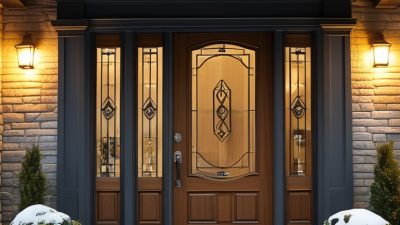
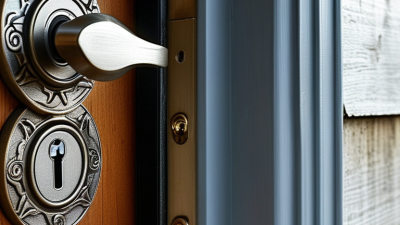
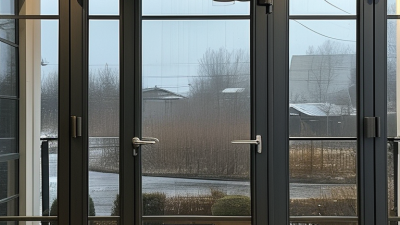
Choosing the right aluminum entry door these days is a lot more than just comparing finishes, glass options, and price tags. For buyers around the world, it’s really about looking at the whole package—thermal breaks, drainage, hardware durability, security features, and how well the installation’s done. Sure, an attractive door might catch your eye, but if water sneaks in at the sill, it’s not doing its job at all.
According to the 2024 Global Status Report on Buildings and Construction by UNEP and the Global Alliance for Buildings and Construction, buildings use up about 32% of the world's energy. That’s a pretty strong sign that investing in good insulated aluminum systems makes sense—especially in places with cold, hot, or coastal climates. The International Energy Agency also stresses how crucial it is to improve the overall performance of building envelopes, and doors are definitely a big part of that.
Building science expert Joseph Lstiburek puts it simply but powerfully: “There’s no such thing as a completely waterproof building.” And honestly, that’s a point that hits home when you think about entry doors. Proper sill design, flashing, seals, and actually testing everything on site—these things matter just as much as the aluminum frame itself. Probably even more.
This guide for 2026 looks into the main types of aluminum entry doors used in homes, commercial spaces, and mixed-use buildings. It covers everything from hinges and pivots to thermally broken, glazed, security-rated, and custom options. Plus, it takes into account practical concerns that come up for international aluminum door suppliers—things like lead times, certifications, replacement parts, and how regional climates can affect performance.
Here’s the tough truth: no one-size-fits-all solution exists. It’s kinda uncomfortable to admit, but different markets and manufacturers have different specs, and that means some comparisons won’t be perfect. Before making a purchase, it’s super important to double-check all the data—air and water tightness, structural strength, thermal performance, and corrosion resistance. And remember, a solid decision isn’t just about looking at test results or the fancy showroom displays; real-world installation experience counts just as much.
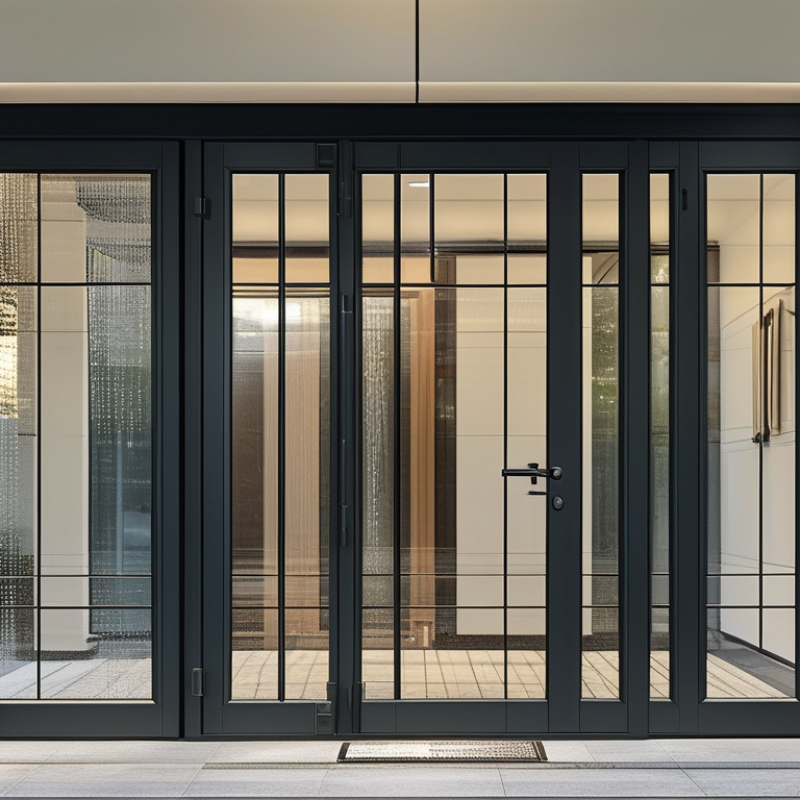
70 g/cm³ Aluminum: Lightweight Strength for Large Entry Door Panels
For 2026 global buyers, large aluminum entry doors offer a useful balance between low weight and structural performance. However, 70 g/cm³ is not the density of aluminum. Pure aluminum measures about 2.70 g/cm³, while common alloys usually range from 2.6 to 2.9 g/cm³. The advertised figure should be checked carefully before comparing specifications.
This correction matters for oversized door panels. Lower material density reduces hinge stress, transport weight, and installation effort. Yet panel design remains critical. A large door needs reinforced internal sections, accurate corner joints, and properly rated hinges. On site, even a lightweight panel can sag when its frame lacks adequate support. That detail is easy to underestimate.
Thermal-break profiles can reduce heat transfer through the frame, especially in hot or cold regions. Multi-point locks improve panel alignment and resistance to forced movement. Powder-coated or anodized surfaces may also help protect against moisture and urban pollutants. Buyers should request alloy grades, wall thickness, maximum panel dimensions, hardware load ratings, and test evidence.
A heavier door is not automatically stronger. A lighter one is not automatically better. Engineering quality decides the result.
2026 Door Types: Glazed, Solid-Core, Sliding, and Pivot Aluminum
2026 Best Aluminum Entry Door Types for Global Buyers
Aluminum entry doors now serve different climates, layouts, and security expectations.
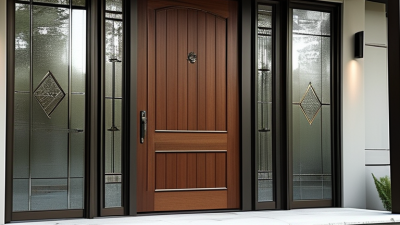
Glazed doors bring daylight into narrow foyers, but large glass areas can increase heat gain. Low-emissivity double or triple glazing helps control this risk. The IEA’s Buildings 2023 report states that buildings use about 30% of global final energy. Door selection therefore affects more than appearance. It also influences comfort and operating costs.
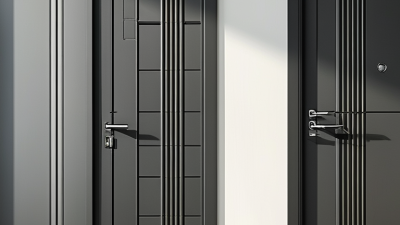
Solid-core aluminum doors offer stronger privacy, better acoustic control, and a more substantial feel. They suit bedrooms, offices, and exposed entrances. However, their core material and drainage design deserve careful inspection. A heavier slab is not automatically a better door.
Sliding aluminum doors save floor space and support wide openings. Their rollers, tracks, and seals must match the project’s traffic level. Pivot doors create a dramatic entrance, especially in large hospitality or residential spaces.
Yet their weight demands accurate hinges, strong frames, and reliable weather seals. I have seen impressive pivot doors perform poorly after installation because the surrounding structure was underestimated. The perfect door does not exist.
Tips:
Check thermal values, glass specifications, air leakage, water resistance, and wind-load testing. Compare results under recognized regional standards. Confirm whether “solid-core” means insulated construction or simply a thick panel. For coastal projects, request corrosion testing and suitable surface treatment. A local installer’s judgment still matters. Reports help, but site conditions decide.
Thermal-Break Frames: Compare U-Factors in W/m²·K
For global buyers, thermal-break frames deserve closer attention than finish or handle design. A polyamide strip separates the exterior and interior aluminum, reducing direct heat flow. The European standard EN ISO 10077-2 calculates frame U-factor, Uf, through two-dimensional heat-transfer modelling. Lower values mean better insulation, but Uf is not the whole door’s performance.
Typical aluminum frames without thermal breaks may reach 5.0–7.0 W/m²·K. Well-designed thermal-break frames often measure about 1.5–2.5 W/m²·K, depending on profile depth, inserts, and glazing. These figures are indicative, not certification results. The Passive House Institute uses a maximum door U-value of 0.80 W/m²·K for certified entrance doors in relevant climate categories. That value refers to the complete door, Ud, rather than the frame alone. This difference matters.
Ask an Aluminum Entry Door Wholesaler for EN 12567-1 or equivalent test evidence. Check the declared Uf, Ud, glass Ug, spacer type, and installation conditions. A large glazed panel can weaken an excellent frame result. Door thresholds can also create a cold strip near the floor. Small detail matters. In hot climates, thermal breaks limit indoor heat gain, but solar-control glass and airtight seals remain important. I would not accept a rounded “low U-factor” claim without boundary conditions. Some catalog figures look impressive because they describe the best profile, not the assembled door. Independent testing is slower, yet more trustworthy.
ASTM E283, E331, and E330: Air, Water, and Wind-Test Data
2026 Best Aluminum Entry Door Types for Global Buyers
ASTM E283 measures air leakage through a closed aluminum entry door. The common reference pressure is 1.57 psf, or about 75 Pa. Results are reported in cubic feet per minute per square foot. Lower numbers usually indicate tighter seals, but installation quality can change the result. FGIA technical guidance and NFRC certification records show why buyers should compare tested sizes, pressure levels, and laboratory conditions.
ASTM E331 examines water penetration during controlled spray exposure. A frequently used benchmark is 2.86 psf, or approximately 137 Pa, although project specifications may require higher pressure. The report should identify leakage locations, test duration, sill design, and drainage details. A recessed threshold, continuous gasket, and properly sloped sill offer visible protection against wind-driven rain. Small details matter.
ASTM E330 evaluates structural performance under positive and negative wind pressure. The test pressure should match the project’s design pressure, calculated from local wind speed, building height, exposure, and opening size. FGIA/WDMA/CSA performance-grade data provides useful comparison points, while regional building codes remain essential. I would not treat one successful test as a lifetime guarantee. Field joints, imperfect shims, and rushed sealing can weaken excellent factory data. Check the complete report, not only the rating.
2026 Best Aluminum Entry Door Types for Global Buyers
ASTM E283, E331, and E330 reference conditions for air leakage, water penetration, and structural wind resistance.
Reference values shown are test conditions, not universal product ratings. ASTM E283 is commonly evaluated at 1.57 psf, ASTM E331 at 2.86 psf, and ASTM E330 structural testing is commonly conducted at 1.5 times the specified design pressure. Project specifications and local codes may require different values.
AAMA 2603–2605: Choose Finishes for Coastal and Urban Exposure
For global buyers, an aluminum entry door must match its exposure, not just its appearance. Coastal air carries salt that can settle inside hinges, joints, and frame corners. Urban air adds dust, moisture, and acidic pollutants. The 2016 NACE IMPACT study estimated global corrosion costs at US$2.5 trillion annually, equal to about 3.4% of global economic output. That figure makes finish selection a practical maintenance decision.
AAMA 2603 suits sheltered locations with moderate weathering demands. It offers basic color and film-performance requirements. AAMA 2604 provides stronger durability for many urban and commercial environments. AAMA 2605 applies the most demanding performance criteria, including superior resistance to weathering and chemicals.
These classifications are not decorative labels. They involve coating thickness, adhesion, color retention, chalk resistance, and exposure testing. An experienced Aluminum Entry Door Manufacturer should provide the exact specification, pretreatment method, and test documentation.
For a seaside apartment, I would inspect the ocean-facing elevation before choosing a finish. A darker door can feel warmer in direct sun, while salt may collect beneath overlapping trim. Ask for sealed joints and compatible fasteners. Small details matter. AAMA testing cannot reproduce every balcony, street canyon, or monsoon season. That is the uncomfortable part. Real buildings often expose doors unevenly. The finish may meet its class, yet poor drainage can still shorten service life. Buyers should compare local climate data, installation drawings, and written warranty conditions before approving the color sample.
EN 14351-1 and NFRC Labels: Verify Performance Claims
For global buyers, an aluminum entry door should be judged by verified performance, not profile thickness alone. EN 14351-1 supports performance assessment for external pedestrian doorsets in Europe. Check the Declaration of Performance and CE marking route. Look for air permeability, watertightness, wind load, thermal transmittance, and acoustic results. The exact values must match the tested configuration. A factory may change glass, seals, or threshold details later. That small change matters.
In North America, an NFRC label reports certified U-factor, solar heat gain coefficient, visible transmittance, and air leakage. These figures use defined test conditions. They are not interchangeable with European values. The 2024 NFRC Certified Products Directory shows why product identification is essential: ratings belong to specific frame, glass, spacer, and hardware combinations. Ask an Aluminum Entry Door Factory for the complete label, test report, and certificate number. Photograph the label before shipment.
Energy performance deserves practical attention. The International Energy Agency’s 2023 Global Status Report for Buildings states that buildings account for about 30% of global final energy consumption. A poorly sealed entrance can weaken an efficient façade. Check the threshold under wind-driven rain. Inspect corner joints and compression seals by hand. I have seen impressive laboratory figures fail after careless installation. That is an uncomfortable limitation. Request installation instructions, tolerances, and field quality records, not only a brochure. Some claims still need questioning.
German Cast Aluminum Armour Doors: Luxury Security Insights from Fortune Business Insights’ Security Doors Market Report
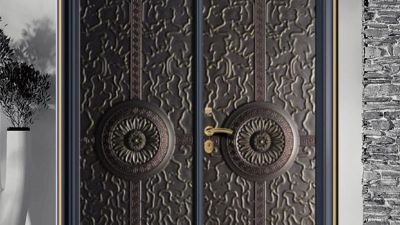
German cast aluminum armour doors represent the growing intersection of luxury design and advanced residential security. As reflected in the Security Doors Market Report by Fortune Business Insights, modern buyers increasingly seek entrance systems that provide dependable protection while complementing premium architectural styles. This royal-style door responds to that demand with a precision-cast aluminum exterior, a reinforced steel security core, and carefully shaped relief ornamentation inspired by palace entrances. Its substantial construction creates a strong physical barrier, while the detailed surface adds distinction to villas, estates, and upscale residences.
Inspired by the German philosophy of exact engineering, the door is produced with close attention to proportion, alignment, and finishing quality. Each casting detail is designed for consistent definition, and every structural component is selected to support durability, stability, and smooth daily operation. The contrast between metallic strength and aristocratic decoration gives the entrance a refined yet commanding presence. For homeowners who value disciplined manufacturing, long-term performance, and expressive architecture, this combination offers a practical security solution without sacrificing elegance. Its tailored appearance can harmonize with classical façades, contemporary compounds, and other high-end residential environments.
Conclusion
Choosing the right Aluminum Entry Door in 2026 requires balancing strength, thermal performance, security, design, and long-term durability. Aluminum’s low density, approximately 2.70 g/cm³, provides lightweight strength for large panels without sacrificing structural stability. Global buyers can compare glazed, solid-core, sliding, and pivot designs according to daylight, insulation, accessibility, and architectural requirements. Thermal-break frames should be evaluated through U-factors measured in W/m²·K, with lower values generally indicating better insulation.
Reliable performance also depends on tested evidence. ASTM E283, E331, and E330 address air leakage, water penetration, and structural wind resistance, while AAMA 2603–2605 classifications help match coatings to coastal, humid, or urban environments. Buyers should also verify EN 14351-1 documentation and NFRC labels where applicable, ensuring that stated performance values are transparent and comparable. For security, RC2 or RC3 multipoint locking systems provide clearly defined resistance levels and should be selected according to the building’s location, risk profile, and access requirements.