Leave Your Message
Need Live Support?
Chat With Us Now
Chat With Us Now
Picking out a new front door might seem pretty straightforward at first glance, but once you start thinking about sunlight, weather, security, and daily wear and tear, things get a bit more complicated. Comparing aluminum versus fiberglass doors isn’t just a quick price check — each material reacts differently when temperatures fluctuate, when the door gets a lot of use, or even after years of cleaning.
In real homes, aluminum doors can give you a sleek look, sturdy frames, and good resistance to moisture. Their slim profiles tend to fit nicely with modern design styles, especially if you want those big glass panels. That said, metal is a good heat and cold conductor, so how well a door insulates really depends on the core, the thermal breaks, and how it’s installed. If the frame isn’t fitted properly, it can make the door feel less comfortable—even if the door itself is built well.
On the other hand, fiberglass doors often look like real wood, perform steadily over time, and offer solid insulation. A contemporary fiberglass door can give your home a warm, inviting look without the hassle of constant refinishing. But hey, fiberglass isn’t automatically better. The quality of the finish, the hardware, the sill, and the sealing system all make a difference. Sometimes, a cheaper fiberglass door might fade, crack, or just feel a bit less substantial than you'd expect—something that’s easy to miss if you're not careful.
In this guide, I’ll walk you through both options based on real-world criteria like energy efficiency, durability, maintenance needs, design flexibility, security features, and overall value. Keep in mind, climate and installation quality are key — a gorgeous door won’t do much good if it’s not fitted right. It’s best to follow manufacturer specs and go with a pro installer. Still, your personal style and circumstances matter. I tend to favor fiberglass for many home projects, but that’s not a one-size-fits-all answer. Your weather, budget, how much sun or rain the door gets, and your home’s architectural vibe could totally shift that choice. In the end, no material is perfect for every situation—that’s just honesty in a nutshell.
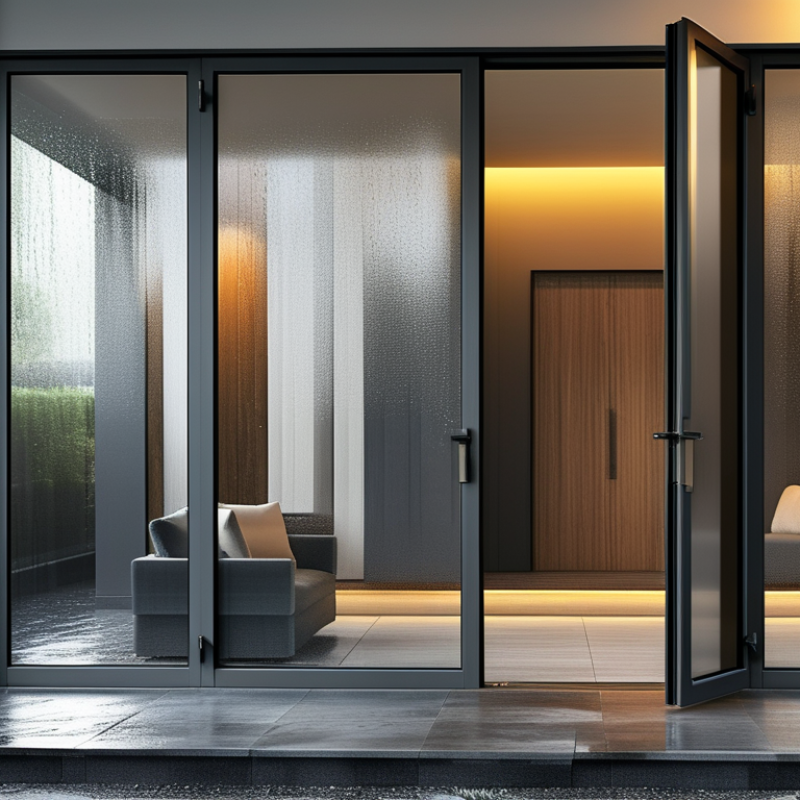
An aluminum front door usually combines a rigid metal frame with an insulated core and aluminum skins. The core may contain polyurethane foam or another thermal barrier. This structure resists warping, impacts, and moisture. However, untreated metal transfers heat quickly. A quality thermal break is essential. Without it, the inner surface can feel cold during winter.
A fiberglass front door often uses a foam core between molded fiberglass skins. The skins imitate painted wood, but they need less maintenance. Fiberglass does not conduct heat as rapidly as aluminum. Its frame still matters. Wood, composite, or reinforced aluminum frames change the door’s insulation and movement. Look closely at corner joints, weather seals, and the threshold. Small gaps can defeat an excellent core.
I would ask an Aluminum Front Door Supplier for section drawings, U-value data, and finish specifications. Do not judge performance from the panel alone. Installation affects air leakage more than many buyers expect. I have seen strong doors perform poorly because the frame was poorly shimmed. That is easy to overlook. Fiberglass can also dent or crack under severe impact, despite its durable surface. Aluminum may show scratches sooner, but repairs are often more straightforward. The better choice depends on climate, exposure, security needs, and maintenance habits. Some comparisons still oversimplify these details.
| Design and Performance Dimension | Aluminum Front Door | Fiberglass Front Door |
|---|---|---|
| Core Construction |
Typical design A hollow or insulated aluminum door leaf commonly uses a honeycomb, mineral, or rigid foam core. The exact core depends on the door system and its fire, acoustic, and thermal requirements. |
Typical design A fiberglass door leaf commonly uses a polyurethane foam core for thermal insulation, sometimes combined with wood, composite, or reinforced structural members around the lock and hinge areas. |
| Outer Skin Material | Aluminum sheet or extruded aluminum profiles form the visible exterior surface. Powder coating or liquid coating is commonly used for color and weather protection. | Fiberglass-reinforced polymer skins are molded over the insulated core. The surface can be smooth or textured and may be painted or finished to resemble wood grain. |
| Frame Design | Aluminum frames are frequently used with the door leaf. A thermally broken frame separates interior and exterior aluminum sections with a low-conductivity barrier to reduce heat transfer. | Frames may be made from composite material, engineered wood, wood, or coated metal. Composite and thermally improved frames reduce moisture-related movement and help limit thermal bridging. |
| Thermal Performance | The metal itself conducts heat readily, so an insulated leaf, thermal breaks, low-conductivity spacers, and well-designed weather seals are important. Performance varies substantially by system. | The low-conductivity foam core and nonmetallic skin generally provide strong thermal insulation. The frame, glazing, threshold, and weather seals still have a major effect on the complete door assembly. |
| Moisture Resistance | Aluminum does not absorb water and will not swell or rot. Corrosion resistance depends on the alloy, coating quality, drainage design, and exposure to salts or harsh chemicals. | Fiberglass skins do not rot and absorb very little water. Unsealed wood components, joints, or damaged coatings can still allow moisture-related deterioration in some door assemblies. |
| Resistance to Denting and Impact | Strong aluminum systems resist general weathering, but relatively thin aluminum skins can dent from concentrated impacts. Heavier-gauge skins and reinforced cores improve impact resistance. | Fiberglass resists many everyday dents and scratches better than thin metal skins. Severe impacts can crack or puncture the skin, and repairs may be more visible on textured finishes. |
| Dimensional Stability | Aluminum is dimensionally stable across normal temperature and humidity changes, although thermal expansion can affect clearances if the frame and leaf are not properly engineered. | Fiberglass is generally stable and less prone to swelling than wood. Temperature changes can still affect the door, frame, seals, and hardware, especially when materials with different expansion rates are combined. |
| Security Potential | Security depends on the complete assembly: leaf thickness, internal reinforcement, hinge protection, lock hardware, frame anchoring, and the quality of the strike-side structure. Aluminum can support robust commercial-style systems. | Security also depends on the complete assembly rather than the skin alone. Reinforced lock blocks, strong hinges, a rigid frame, and a properly installed multi-point or deadbolt system are important. |
| Weight and Handling | Weight ranges from relatively light insulated constructions to heavy reinforced systems. Aluminum doors are often easier to handle than solid wood doors, but glazing and reinforcement can add substantial weight. | Foam-filled fiberglass doors are commonly lighter than solid wood doors. Large glass panels, thick cores, and structural reinforcement increase the weight and require suitable hinges. |
| Surface Finish and Appearance | Offers clean modern profiles, narrow sightlines, anodized appearances, and a wide range of powder-coated colors. Dark finishes can become hot in direct sunlight. | Offers smooth contemporary surfaces and molded wood-grain textures. Paint color can usually be changed, but dark colors may increase heat absorption and require finish systems suitable for exterior exposure. |
| Maintenance Requirements | Usually requires routine cleaning, inspection of seals and drainage paths, and occasional coating or hardware maintenance. Scratches that expose the substrate should be repaired promptly in corrosive environments. | Usually requires cleaning, periodic repainting when the finish weathers, and inspection of seals, edges, and hardware. Surface damage should be repaired to prevent water from reaching vulnerable components. |
| Coastal and High-Humidity Use | Suitable when the alloy, fasteners, coating, drainage, and installation details are selected for salt exposure. Stainless or corrosion-resistant hardware is often preferred near the coast. | Fiberglass skin performs well in humid conditions, but hinges, locks, fasteners, frames, and any exposed wood components still need corrosion and moisture protection. |
| Acoustic Performance | Sound reduction depends on the core density, leaf thickness, perimeter seals, threshold, and glazing. A heavier insulated construction with continuous seals generally performs better than a lightweight hollow leaf. | The foam core can contribute to sound reduction, but acoustic performance is governed by the full assembly. Glass area, gaps, seals, and frame construction can matter more than the skin material. |
| Typical Service Life | A well-designed and correctly installed system can provide long service. Actual life depends on climate, traffic, coating durability, hardware quality, drainage, and maintenance. | A well-maintained fiberglass system can also provide long service. Finish exposure, seal replacement, hardware wear, installation quality, and water management are key factors. |
| Best-Fit Applications | Modern architectural entrances, large openings, narrow-profile designs, high-traffic locations, and projects where a metal aesthetic or extensive color selection is desired. | Residential entrances, energy-conscious renovations, wood-look designs, humid climates, and projects where resistance to rot and low routine maintenance are priorities. |
| Main Advantages | Strong profile options, excellent dimensional stability, non-absorptive metal surface, modern appearance, and broad compatibility with glazed or large-format door systems. | Efficient insulated core, low water absorption, good resistance to everyday dents, wood-look options, and generally low maintenance when properly finished and installed. |
| Main Limitations | Higher heat conduction without thermal breaks, possible denting of thin skins, potential coating or corrosion issues in aggressive environments, and possible condensation if the assembly is poorly designed. | Cracks or punctures from severe impacts can be difficult to disguise, repainting may be needed over time, and frame or hardware components may have different moisture and movement characteristics. |
| Overall Selection Guidance | Choose aluminum when profile design, large-format glazing, metal appearance, or heavy-duty system flexibility is the priority. Specify thermal breaks and a complete tested assembly for energy performance. | Choose fiberglass when insulation, low water absorption, wood-like appearance, and residential maintenance convenience are the priority. Compare the complete door-and-frame assembly rather than the skin alone. |
Note: Actual performance depends on the complete door assembly, including the core, skin, frame, threshold, glazing, seals, hardware, installation, climate, and applicable product testing. Values and construction details can vary by specification.
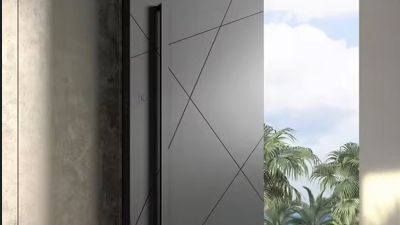
Modern black aluminum pivot doors bring a bold architectural presence to contemporary villas, combining refined aesthetics with practical security. Their deep black finish creates a clean, dramatic focal point at the entrance, while the large pivot-opening system delivers a smooth, spacious movement that enhances both usability and visual impact. Designed for homeowners who value sophisticated entryway design, these doors complement minimalist façades, natural stone, concrete, and warm wood accents.
A steel-wood composite door panel provides a solid security core with a welcoming, textured appearance, while the aluminum alloy outer frame offers lightweight durability and resistance to changing weather conditions. Insulated glass, constructed with 5mm glass, a 20A air layer, and 5mm glass, allows natural light to enter without sacrificing comfort. This combination helps create a brighter, more open entrance while maintaining the substantial feel expected from a high-performance villa security door.
Advanced hardware supports reliable daily operation, and surface treatments such as powder coating, anodizing, or fluorocarbon paint allow extensive color and finish customization. Waterproof, airtight, and soundproof performance helps protect the interior from rain, drafts, and outside noise. With tailored dimensions, personalized colors, and long-term warranty support, this modern pivot door offers a balanced solution for villa owners seeking stronger security, lasting weather resistance, and a distinctive contemporary entrance.
It usually combines aluminum skins, a rigid frame, and an insulated core. The core may contain foam or another thermal barrier. Strong, but thermal breaks matter.
It commonly uses molded fiberglass skins around a foam core. The surface can resemble painted wood. Maintenance is usually simpler.
Fiberglass generally transfers heat more slowly than untreated aluminum. However, aluminum can insulate well with a proper thermal break. The frame still matters.
Aluminum resists warping, impacts, and moisture effectively. Poorly sealed joints can still allow water inside. Details decide performance.
Yes, severe impacts can dent or crack fiberglass surfaces. They are durable, not indestructible. That is easy to forget.
ASTM E283 measures air leakage through the complete door assembly. Lower leakage usually indicates tighter seals and fewer gaps. Inspect installation too.
ASTM E331 sprays water against the exterior under controlled pressure. Inspectors check panels, corners, glazing, thresholds, and the interior side. Water finds small gaps.
Request section drawings, U-value data, finish details, and complete test reports. Check the tested size, pressure level, frame design, and pass criteria. Appearance is not enough.
Yes, installation can affect air and water resistance more than the panel material. Uneven walls, poor shimming, shrinking sealant, and blocked drainage can cause problems. A great door can fail.
Choosing between an Aluminum Vs Fiberglass Front Door requires more than comparing appearance or initial price. Aluminum doors typically combine a metal frame, insulated core, and finished aluminum skin, while fiberglass doors use a reinforced frame, insulated core, and molded fiberglass skin. Their performance should be compared through NFRC 100 U-factors and R-values, with lower U-factors generally indicating better resistance to heat transfer. Thermal breaks, weatherstripping, and ENERGY STAR efficiency criteria are also important for reducing drafts and energy loss.
Durability and long-term value depend on verified testing and maintenance needs. ASTM E283 and ASTM E331 evaluations can help assess air leakage and water resistance, while AAMA 2605 and ASTM G154 testing indicate how well an aluminum finish may resist weathering and ultraviolet exposure. Security should be reviewed through ASTM F2925 considerations, reinforced construction, and multipoint locking hardware. Finally, a practical 10-year cost comparison should include energy use, cleaning and refinishing, repairs, and possible replacement. The best choice depends on climate, exposure, security priorities, and total ownership cost rather than material alone.