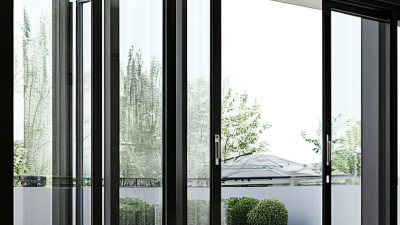
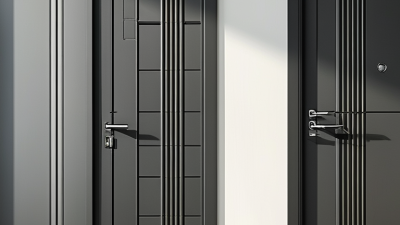
These days, the global push for more energy-efficient building products is really shaking up the door and façade industry. According to the International Energy Agency, buildings account for around 30% of all energy used worldwide and are responsible for about 26% of energy-related emissions. That puts some serious pressure on us to rethink our options—so the Thermal Break Aluminum Door isn’t just a cool design choice anymore. It’s turning into a smart and practical decision when it comes to sealing up a building.
Looking ahead, Grand View Research suggests that the market for energy-efficient windows is only going to grow through 2030. Why? Because tighter building codes and renovation projects are boosting demand. These thermal-break systems play a key role—they cut down on heat transfer through aluminum frames and improve comfort around doors, especially when it's freezing outside or scorching hot. But, honestly, how well they perform really depends on the whole setup—things like frame design, glass type, weather seals, drainage, and proper installation all matter a lot.
Joseph Lstiburek, a well-known expert in building envelopes, sums it up nicely: “A building enclosure is a system, not just a bunch of parts.” That’s a good rule of thumb whenever you’re comparing suppliers. A reliable Thermal Break Aluminum Door should provide tested numbers for U-values, air leakage, water resistance, and all the certifications—you shouldn’t have to guess. Also, don’t forget that experience on the ground matters. A door might look fancy and perfect, but if the seal around the threshold is sloppy, that’s a problem you’ll regret later.
In this article, I’ve taken a close look at the top manufacturers in China—covering their product engineering, factory capabilities, transparency with testing, customization options, warranty policies, and export experience. Keep in mind, though, that rankings aren’t set in stone. Test results can vary between labs, project sizes, and how things are installed. So, if you’re thinking about placing a big order, double-check the latest certifications and even inspect a sample corner if you can. Sometimes, it’s the little details that make all the difference for long-term performance.

What Are Thermal Break Aluminum Doors?
Thermal break aluminum doors use a non-conductive barrier between two aluminum profiles. This barrier is usually reinforced polyamide. It interrupts the direct path of heat through the frame. The result is a warmer interior surface during winter and a cooler one during summer.
The detail matters. A low U-value alone can mislead. Door performance also depends on glazing, seals, installation, and frame geometry. ISO 10077-1 provides methods for calculating thermal transmittance in windows and doors. The U.S. Department of Energy reports that windows can account for 25% to 30% of residential heating and cooling energy use. Doors are smaller, but poorly sealed entrances can still create noticeable drafts. In practice, I check the frame Uf value, whole-door Uw value, air leakage, water resistance, and condensation behavior.
The International Energy Agency states that buildings consumed about 30% of global final energy in 2022. Better envelopes remain important. A Thermal Break Aluminum Door Wholesaler should provide tested performance data, section drawings, and installation instructions. Ask whether results cover the complete door assembly, not only the aluminum profile. A warm-edge insulated glass unit and continuous compression seals can improve comfort near the threshold. It is not magic. Even a well-designed thermal break can underperform when installers leave gaps, compress seals unevenly, or drain water incorrectly. That is where product reviews need more honest attention.
How to Evaluate China’s Thermal Break Door Manufacturers
When comparing China’s top 10 thermal break aluminum door manufacturers, do not rank them by photographs or catalog thickness. A serious evaluation starts with factory evidence. Request production records, material certificates, and recent test reports for the exact door system. Check thermal transmittance, air leakage, water resistance, and wind-load results. These figures should match your project’s climate and building code. A certificate for another profile proves little. Ask difficult questions early.
Inspect the thermal break itself. Polyamide strips should fit tightly, without gaps, twisting, or brittle edges. Review aluminum alloy grades, wall thickness, corner joints, gaskets, glass spacers, and drainage paths. A sample door should open smoothly after repeated cycles. Measure frame alignment on site. Small errors can create drafts, noise, and water stains. I have seen attractive samples hide weak corner processing. That mistake is easy to miss.
Evaluate the manufacturer’s process, not only its product. Check tooling control, coating consistency, packaging, lead times, and replacement-part support. Request references from comparable buildings, then contact the owners directly. Confirm who handles drawings, installation guidance, inspections, and warranty claims. Use an independent laboratory when test data seems vague. Price still matters, but the cheapest quote may exclude hardware or proper packing. My own checklist is never perfect. Revise it after every site visit.
The Top 10 Thermal Break Aluminum Door Manufacturers in China
China’s top ten thermal break aluminum door manufacturers are best judged by evidence, not attractive catalog images. These suppliers usually combine aluminum extrusion, precision machining, powder coating, and door assembly. Their strongest products use polyamide insulation strips, multi-point locks, EPDM seals, and reinforced corner joints. These details reduce heat transfer, air leakage, and frame distortion.
A reliable shortlist should include manufacturers with tested thermal performance and documented production controls. Ask for U-value reports, profile specifications, coating certifications, and hardware test records. Factory experience matters too. Reviewers should inspect extrusion lines, CNC equipment, assembly tables, and finished-door storage. Consistent gap measurements reveal more than polished showrooms. Some manufacturers provide impressive samples but lack stable batch control. That weakness deserves attention.
Project requirements also separate the leading ten from ordinary suppliers. Coastal buildings may need stronger corrosion protection. Cold regions require better seals and thicker insulation chambers. Large doors need reinforced profiles and carefully calculated hinges. I would request a full-size sample before signing a large order. It exposes practical problems, including stiff handles, uneven gaskets, or poor drainage. No manufacturer is perfect. Even a highly experienced factory can miss details when drawings change late. Clear technical approvals and third-party inspections can reduce that risk.
Key Products, Technologies, and Market Strengths
China’s top ten Thermal Break Aluminum Door Manufacturers compete through product depth, testing, and project experience. Typical products include lift-and-slide doors, casement doors, folding systems, and insulated entrance doors. The International Energy Agency’s Buildings 2023 report states that buildings consume about 30% of global final energy. This makes thermal performance commercially important, not merely decorative.
Leading suppliers usually combine polyamide thermal barriers, multi-chamber profiles, low-e glazing, and adjustable multipoint locks. Some use CNC machining and automated corner crimping to improve frame accuracy. A reliable Thermal Break Aluminum Door Manufacturer should provide documented U-values, air-tightness results, water resistance data, and wind-load testing. EN 14351-1 and ISO 10077-1 offer useful testing references. Still, a low U-value on paper can disappoint. Poor installation creates gaps around the frame. This is where many comparisons become incomplete.
Tips: Ask for full test reports, not marketing screenshots. Check the spacer type, gasket material, and drainage design. Request a corner sample before placing a large order. Also inspect warranty terms and replacement support. The Global Status Report for Buildings and Construction 2023 links buildings and construction to approximately 37% of global energy-related emissions. Better doors can help, but glazing ratio, orientation, and installation quality still influence actual performance. Mistakes happen, even with advanced profiles.
China's Thermal Break Aluminum Door Manufacturing Landscape
Industry benchmark of commonly specified products, technologies, and market strengths among leading Chinese thermal break aluminum door manufacturers. The figures represent capability coverage across a 10-supplier benchmark, not individual company or brand data.
The benchmark highlights the strongest areas of China's supply base: customized project production, thermally insulated aluminum systems, Low-E insulating glass compatibility, powder coating, multi-point locking, and export-oriented manufacturing. PA66-GF25 polyamide strips and insulated glazing are widely used technologies for improving thermal performance and condensation resistance.
Comparing Quality, Customization, Prices, and Certifications
China Top 10 Thermal Break Aluminum Door Manufacturers: Comparing Quality, Customization, Prices, and Certifications
When comparing China’s top ten thermal break aluminum door manufacturers, inspect more than catalog photos. A reliable Thermal Break Aluminum Door Factory should explain its aluminum alloy, profile thickness, polyamide strip width, and hardware source. Ask for sample sections. The thermal barrier should remain continuous at corners and locking points. Poor assembly often appears as uneven gaskets, loose corners, or visible sealant marks.
Customization separates experienced suppliers from simple resellers. Confirm available colors, wood-grain finishes, glass thickness, opening direction, screen systems, and unusual dimensions. Some factories accept small trial orders, while others require larger production quantities. Request a measured drawing before approving the quotation. Small design changes can affect weight, drainage, and installation time. Factory experience matters here, but it is not always easy to prove.
Price comparisons should include packaging, molds, glass, hardware, testing, and delivery terms. The lowest quotation may exclude essential items. Check reports for air tightness, water resistance, wind load, thermal performance, and acoustic results. Certifications such as ISO 9001 can support process reliability, yet they do not guarantee every door performs well. Verify the certificate holder, issue date, product scope, and testing laboratory. I would also inspect one completed project, because polished documents can hide inconsistent workmanship. One overlooked detail: local installers must understand the frame’s drainage path.
How to Choose the Right Chinese Manufacturer for Your Project
Choosing a Chinese Thermal Break Aluminum Door Company requires more than comparing catalog prices.
Start with project conditions: wind exposure, opening sizes, coastal humidity, security needs, and expected traffic. Ask for section drawings, alloy grades, thermal values, and hardware specifications. A capable supplier should explain each choice clearly. Vague answers are warning signs.
Request recent factory photographs, production-flow details, and references for similar buildings. If possible, inspect a sample corner, not only a polished showroom door. Check the thermal break strip, gasket joints, drainage paths, weld quality, and surface finish under normal light.
Ask for independent test reports covering air leakage, water resistance, wind pressure, and thermal performance. Verify whether reports match the proposed profile system. They sometimes do not.
Reliable communication matters after the deposit. Confirm drawing approval, packaging, lead times, replacement procedures, and inspection responsibilities in writing. A good manufacturer assigns one technical contact and responds with measured revisions.
Discuss local installation conditions early. Even an excellent door can fail after poor leveling or sealing. I have found that the cheapest quotation often hides missing accessories or weak after-sales support.
Still, no factory is perfect. Leave room for trial orders, third-party inspection, and honest correction when the first sample exposes a problem.
Factory Interior Aluminum Frame Wooden Doors for Apartments: Design, Benefits, and Selection Guide
Factory interior aluminum-frame wooden doors are increasingly suited to apartment projects that require durability, acoustic comfort, and coordinated design. The 2023 Global Status Report for Buildings and Construction states that buildings account for approximately 37% of global energy-related emissions, reinforcing the value of long-life, low-maintenance components in residential construction. An aluminum-and-composite-wood door combines a stable, corrosion-resistant frame with the visual warmth of wood, while a PET surface provides a smooth, fingerprint-resistant finish for high-traffic interiors. This specification works well in bedrooms, corridors, offices, and shared residential spaces where appearance and daily performance must coexist.
Selection should begin with verified performance rather than appearance alone. Ask for fire-resistance documentation, acoustic test results expressed through Rw or STC ratings, hardware specifications, and evidence that the complete door assembly—not only the slab—has been tested. The International Organization for Standardization’s ISO 717 framework provides a recognized method for rating airborne sound insulation, helping buyers compare products consistently. For apartment developments, also review dimensional tolerances, moisture resistance, surface-color consistency, installation details, and replacement-part availability. A factory-finished slab with customizable sizes, colors, and graphic layouts can simplify multi-unit procurement, while a minimum order of two sets and a typical 15–25 working-day production window can support phased renovation or small commercial projects. A warranty exceeding five years further strengthens lifecycle planning when supported by clear service terms.
FAQS
Judge factory evidence, not attractive photographs. Request records for the exact door system. Check test reports, material certificates, and production history. Catalog thickness alone proves little.
Review thermal transmittance, air leakage, water resistance, and wind-load results. Match them with your climate and building requirements. One certificate may cover another profile. Ask difficult questions early.
Examine the polyamide strips closely. They should fit tightly, without gaps, twisting, or brittle edges. Check frame thickness and corner joints. Small defects create drafts.
The door should open smoothly after repeated cycles. Handles should feel firm, not stiff. Gaskets must remain even around the frame. A full-size sample reveals practical problems.
Inspect seals, glass spacers, drainage paths, hinges, and multipoint locks. Confirm the aluminum alloy and wall thickness. Weak corner processing can hide behind a polished finish.
Visit extrusion lines, machining areas, assembly tables, and storage spaces. Check tooling control and coating consistency. Review packaging and lead times. Stable batches matter more than one perfect sample.
Request comparable project references and contact the owners directly. Confirm drawing responsibility, installation guidance, inspections, and warranty handling. Ask about replacement parts. Details often disappear later.
Not always. A low quote may exclude hardware or proper packing. Compare the complete delivered system. Independent testing helps when data seems vague. My checklist still needs revision after every site visit.
Conclusion
This guide explains what Thermal Break Aluminum Door systems are and how their insulated polyamide barriers reduce heat transfer, condensation, and energy loss while maintaining the strength and durability of aluminum. It also presents a practical framework for evaluating Chinese manufacturers, including production capability, material quality, engineering expertise, testing procedures, customization options, lead times, communication, and after-sales support.
The article reviews ten leading categories of manufacturers without focusing on brand names, highlighting their product ranges, thermal performance, design flexibility, manufacturing technologies, and market experience. It compares quality levels, customization possibilities, pricing factors, and common certifications, helping buyers understand how specifications affect overall value. Finally, it offers clear guidance for selecting the right supplier based on project requirements, climate, building standards, budget, order volume, installation conditions, and long-term performance expectations.