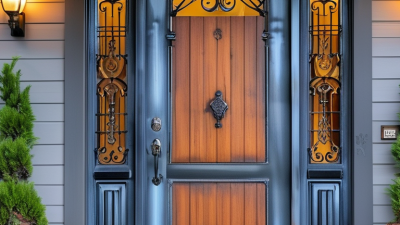
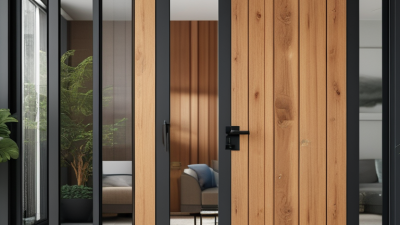
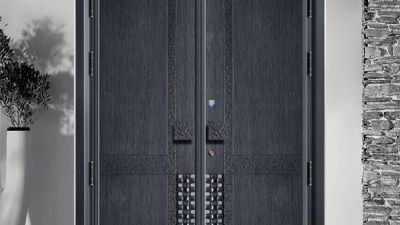
Picking out a modern villa door isn't just about drooling over pretty pictures online. I mean, in China, the top 10 modern villa doors often mix things like aluminum, steel, glass, timber, and smart access systems, and each material kind of gives a different vibe to your entrance. So, it’s not a one-size-fits-all thing.
So, what's the best door for a modern villa? Honestly, it really depends—on the climate you’re in, security needs, the overall style of your place, and how you use it day to day. For a coastal villa, you'll probably want something like corrosion-resistant aluminum and maybe marine-grade hardware—that stuff can handle the salt and humidity. If you’re up in the mountains, good insulation, reinforced frames, and solid weather seals are the way to go. And yes, while large glass panels can make your entrance look super bright and welcoming, they also mean you’ve gotta think about safety and privacy—looks are great, but they’re not everything.
In this guide, I’m looking at practical stuff—thermal performance, how sturdy the door is, hinge quality, locking systems, how accurately it gets installed, warranty support, and what kind of maintenance you’ll need. Plus, I check how manufacturers handle testing, custom sizes, and so on. A good modern villa door supplier should give you clear specs, honest delivery times, tips on installation, and real project references. It’s always smart to hear from people who’ve actually used them because while reviews help, they might not show you every long-term hiccup. When it comes down to it, details matter.
Here’s the thing: the most expensive door isn’t automatically the best fit. You’ve gotta find one that matches your villa’s opening, your local weather conditions, your security worries, and your interior style. Sometimes, folks focus too much on fancy finishes and then run into issues like poor drainage or hard-to-find replacement parts—been there, done that. It’s an easy trap to fall into. Looking into China’s top suppliers and comparing what they offer can definitely help you get good value, but don’t forget to check samples, hardware brands, certifications, and after-sales support before making any moves. A great entrance isn’t just about promises; it’s about solid proof.
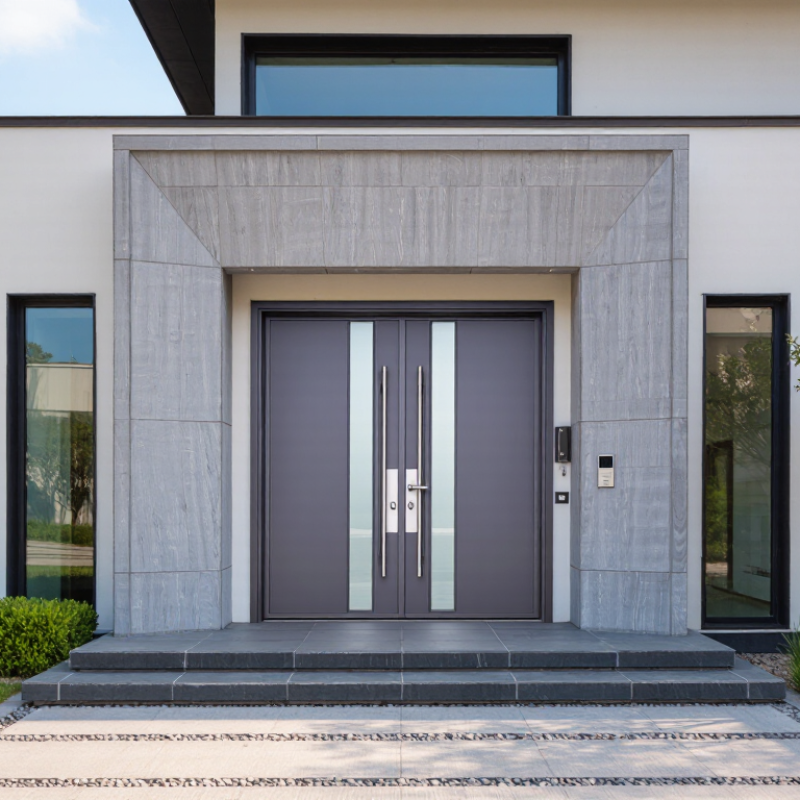
A modern villa door in China is more than a large decorative entrance. It must manage heat, rain, noise, security, and daily movement. China Statistical Yearbook 2024 reports a 66.16% urbanization rate in 2023. This trend is increasing demand for better residential comfort and stronger architectural details.
In practical inspections, airtightness often matters more than appearance. A slim door frame should include a reliable thermal break, multi-point locking, and continuous weather seals. Low-emissivity glass can reduce solar heat, while laminated glass helps control noise and impact risks. The China Building Energy Consumption Annual Report identifies the building sector as a major energy-use source, so poor door sealing can quietly increase cooling and heating loads. Small gaps matter.
Modern style still needs local adaptation. Deep overhangs suit heavy rain, while powder-coated aluminum or treated steel handles humid conditions better. Smart access is useful, but emergency mechanical entry should remain available. Some designs look excellent in showrooms and disappoint after one winter. That deserves reflection. The best choice is not the most expensive door; it is a tested system with documented U-value, air-leakage results, drainage details, and installation records. These details support decisions more reliably than visual trends.
This comparative selection framework evaluates the ten most important characteristics of a modern villa door on a 1–5 scale. In China, the best choice typically combines thermally broken aluminum or engineered wood, a secure multi-point locking system, high acoustic performance, weather resistance, minimalist styling, and smart-home compatibility. The scores are criterion-based reference values rather than company or brand data.
Modern villa entrances need more than visual drama. They must manage weather, security, privacy, and daily use. The best style depends on the building’s proportions and local climate.
01
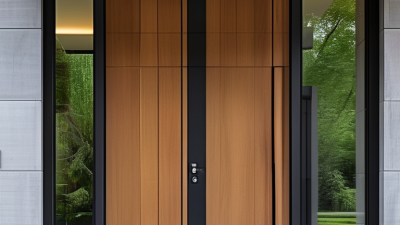
A pivot door creates a strong, gallery-like entrance. A double door suits wide façades and formal layouts.
02
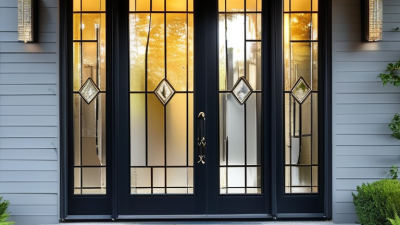
A flush door gives clean lines with minimal decoration. A full-glass door brings daylight into a dark foyer.
Use low-iron or textured glass when privacy matters. These four options look refined, but large glass panels require careful heat control.
A
A slatted door adds rhythm and filtered shadows.
B
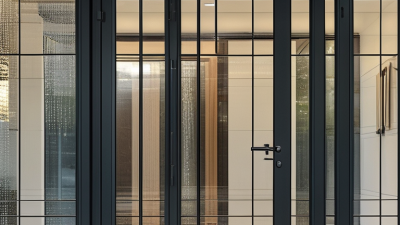
A steel-frame glass door feels lighter and works well with industrial architecture.
C
A solid timber door brings warmth, visible grain, and a softer touch.
D
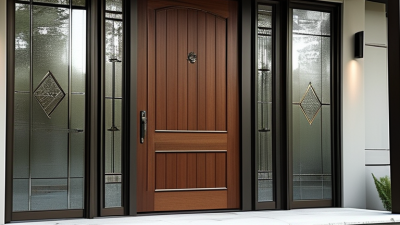
An arched modern door can soften sharp concrete forms.
It is less common, but that difference may become its advantage. Still, timber needs regular maintenance in wet regions.
An oversized single door creates a memorable focal point. A louvered door supports ventilation and suits warm climates, though it may reduce privacy.
Check hinge capacity, drainage, threshold height, and hardware quality before choosing any style. These details often matter more than the first photograph.
A Modern Villa Entrance Door Wholesaler should provide section drawings, finish samples, and tested performance data. I would also request installation guidance. Even an excellent door can fail when the frame is poorly aligned.
Contemporary villa doors combine security, insulation, and visual simplicity. The main material choices are thermally broken aluminum, engineered timber, steel, and low-emissivity glass. Aluminum offers slim frames, corrosion resistance, and stable performance in humid climates. However, untreated metal can feel cold and may transfer heat quickly. A proper thermal break matters more than a fashionable finish.
Engineered timber creates a warmer entrance and resists warping better than many solid wood panels. It still needs sealed edges, especially around the lower rail where rainwater collects. Steel provides excellent impact resistance, but poor coatings can encourage corrosion near coastal areas. Glass panels should use laminated safety glass with suitable solar-control coatings. The International Energy Agency identifies buildings as responsible for roughly 30% of global final energy demand, while UNEP’s 2024 Global Status Report estimates 32% of global energy use and 34% of carbon emissions. These figures cover entire buildings, not doors alone, but they show why material performance deserves attention.
A Modern Villa Entrance Door Manufacturer should provide tested U-values, air-leakage results, and water-tightness classifications. ISO 10077-1 supports thermal-transmittance calculations for doors and windows. In practice, installation often decides the result. I have seen expensive panels perform poorly because the threshold was uneven. I would not claim one material is always best. The climate, opening size, maintenance habits, and hardware quality can change the decision. Sometimes, a simpler aluminum door with accurate fitting outperforms a heavier timber design.
When comparing China’s top 10 modern villa doors, security should be measured, not guessed. Check the door leaf thickness, internal reinforcement, hinge strength, and multi-point locking system. A narrow glass panel may look elegant, but laminated safety glass offers better resistance than ordinary single glazing. The frame should fit tightly, with no visible gaps around the corners.
Insulation matters in both hot and cold regions. Ask for tested U-values, air-leakage data, and acoustic performance. Look closely at the sealing system. A continuous rubber gasket should compress evenly when the door closes.
Thermal-break aluminum frames can reduce heat transfer, while insulated steel or composite cores may improve stability. Poor installation can waste good materials. Even a high-performance door may leak air if the threshold is uneven.
Durability depends on the finish, hardware, drainage, and maintenance access. For coastal villas, corrosion-resistant fasteners and carefully sealed joints deserve attention. Request laboratory test reports, installation instructions, and clear warranty terms from the supplier.
A practical check is simple: open the door repeatedly, inspect the hinges, and test the lock with the frame under slight pressure.
One detail is easy to miss. Heavy doors need properly supported hinges and a strong surrounding wall. I would not choose the most decorative option automatically; a simpler door with verified performance may serve the villa better over time.
A modern villa entrance door should belong to the architecture, not compete with it. In projects I have reviewed, the best results came from matching the door’s proportions with the facade. Wide concrete walls often suit broad pivot doors. Narrow elevations may need a slimmer, taller design. Keep the visual language consistent.
Material changes the entire entrance.
Warm wood softens exposed concrete and stone. Powder-coated metal creates a sharper, cleaner impression. Glass can bring daylight into a dark foyer, but privacy must be considered carefully. I once favored a fully glazed door for its elegant appearance. It looked impressive, yet afternoon heat made the entrance uncomfortable. That decision needed more thought.
Climate and daily use also matter. Coastal villas require corrosion-resistant hardware and careful surface protection. In rainy areas, a deep canopy helps prevent water damage. Door seals, hinges, locking systems, and thermal performance deserve professional inspection. Decorative details should never weaken security or weather resistance. Small gaps become expensive problems.
A reliable Modern Villa Entrance Door Factory should provide accurate measurements, material samples, technical drawings, and installation guidance. Ask how the door handles sunlight, moisture, impact, and repeated use. Check tolerances before production begins. Beautiful renderings can hide practical weaknesses. The strongest choice balances proportion, maintenance, comfort, and local building requirements. Some designs still need revision after seeing the real facade.
Choosing the best Chinese villa door starts with the property, not the catalogue photograph. On real villa projects, I check the entrance orientation, coastal exposure, rainfall, and daily traffic first. A south-facing door may need deeper weather protection and stronger UV resistance. A coastal entrance needs corrosion-resistant aluminum, sealed joints, and stainless-steel hardware.
The International Energy Agency’s Buildings 2024 report states that buildings consume about 30% of global final energy. The U.S. Department of Energy also reports that window heat gain and loss can represent 25–30% of home heating and cooling energy use. Therefore, ask for tested U-values, air leakage results, and water penetration data. Low-emissivity glass, insulated cores, and continuous weather seals can improve comfort near the doorway. Security should be measured, not guessed. Request evidence against standards such as EN 1627 or equivalent impact testing. A reliable Modern Villa Entrance Door Company should provide material certificates, coating specifications, installation drawings, and clear warranty terms.
For a Chinese villa door, aluminum is practical for humid regions, while engineered timber offers warmer texture. Steel can feel highly secure, but poor coatings may rust at cut edges. This is where buyers often overlook installation. A precise frame, drained threshold, and correct wall anchoring matter as much as the door leaf. I would also inspect a full-size sample before ordering. It may reveal uneven color, stiff hinges, or a handle positioned awkwardly. No door is perfect. The best choice balances climate performance, security, appearance, maintenance, and the installer’s accountability.
Choosing the Best Chinese Villa Door for Your Property
| No. | Modern Villa Door Type | Typical Frame / Panel Material | Common Configuration | Main Advantages | Limitations | Best Application | Typical Door Width | Maintenance Level |
|---|---|---|---|---|---|---|---|---|
| 1 | Thermally Broken Aluminum Pivot Door | Powder-coated or anodized aluminum frame with insulated glass, wood veneer, or metal-faced panel | Single oversized pivot leaf, concealed closer, multipoint lock | Strong contemporary appearance, large entrance dimensions, corrosion resistance, good dimensional stability | Higher hardware cost; large leaves require careful structural and installation design | Luxury main entrances and wide architectural façades | 1,000–1,800 mm per leaf | Low |
| 2 | Aluminum Folding Entrance Door | Thermally broken aluminum profiles with double or triple glazing | Two to six hinged panels folding to one or both sides | Creates a very wide opening, supports indoor-outdoor connection, lightweight compared with steel | More seals and moving parts; track alignment is important | Garden-facing entrances, patios, pool areas, and open-plan villas | 2,400–6,000 mm overall opening | Low to medium |
| 3 | Minimalist Aluminum Sliding Door | Thermally broken aluminum frame with tempered or laminated insulating glass | Two or more sliding panels with recessed or surface-mounted tracks | Space-efficient operation, large glass areas, excellent daylight and views | Lower air tightness than a well-sealed hinged door may occur; rollers need adjustment over time | Modern rear entrances, balconies, terraces, and scenic properties | 1,800–6,000 mm overall opening | Low to medium |
| 4 | Steel Security Villa Door | Galvanized or coated steel skin, insulated steel core, reinforced steel frame | Single or double hinged leaf with multipoint locking system | High impact resistance, robust security performance, strong acoustic potential | Heavier than aluminum; damaged coatings must be repaired to prevent corrosion | Primary entrances where security and durability are priorities | 900–1,600 mm per leaf | Medium |
| 5 | Solid Hardwood Villa Door | Engineered hardwood or solid timber with exterior-grade stain or paint | Single or double hinged leaf, optional sidelights and transom | Natural appearance, warm tactile quality, good acoustic mass, easy to customize | Sensitive to moisture, ultraviolet exposure, and seasonal movement if poorly sealed | Traditional-modern villas and designs emphasizing natural materials | 800–1,500 mm per leaf | Medium to high |
| 6 | Aluminum-Clad Wood Door | Engineered wood interior with weather-resistant aluminum exterior cladding | Insulated hinged leaf with insulated glass and multipoint lock | Combines interior wood character with improved exterior weather protection and insulation | More expensive and heavier than standard aluminum or wood doors | High-end properties in climates with strong sun, rain, or temperature variation | 850–1,500 mm per leaf | Low to medium |
| 7 | Frameless Glass Pivot Door | Laminated or toughened safety glass with stainless steel or aluminum pivot hardware | Single pivot leaf, concealed floor closer, minimal visible framing | Very clean visual style, excellent daylight, strong architectural statement | Fingerprints are visible; privacy, solar control, and edge protection require careful specification | Showpiece entrances in private modern residences | 900–1,400 mm per leaf | Medium |
| 8 | Wrought Iron and Glass Door | Steel or iron frame with laminated glass and protective coating | Single or double hinged leaf with decorative metal profiles | Distinctive appearance, solid construction, many grille and glass options | Metal can corrode in coastal environments; thermal performance depends on the frame design | Mediterranean, transitional, and statement villa façades | 900–1,800 mm per leaf | Medium |
| 9 | Composite Thermal Security Door | Steel or aluminum frame with mineral wool, polyurethane, or honeycomb insulated core | Hinged leaf with decorative exterior finish and multipoint lock | Good balance of security, thermal insulation, weather resistance, and design flexibility | Actual performance varies significantly by core, seals, frame, and hardware quality | All-round main entrance use in hot, cold, or mixed climates | 850–1,600 mm per leaf | Low to medium |
| 10 | Smart Entry Door with Electronic Access | Aluminum, steel, or composite door leaf with electronic lock and wired or wireless access module | Hinged or pivot door with fingerprint, PIN, card, mobile, or mechanical key access | Convenient access management, temporary codes, activity records, and integration potential | Requires power or battery maintenance; electronic features should not replace mechanical security | Primary entrances for connected homes and rental or multi-user properties | 850–1,600 mm per leaf | Medium |
Custom High-Security Explosion-Proof Luxury Cast Aluminum Double Doors combine advanced blast-resistance technology with refined architectural design. Built for high-security facilities, industrial buildings, transportation hubs, and other demanding environments, these doors provide dependable protection without the heavy, purely utilitarian appearance commonly associated with traditional security barriers. Their robust cast aluminum construction offers strength, durability, and corrosion resistance, while the double-door configuration creates a commanding entrance with convenient access and a balanced visual profile.
Designed to support both safety and aesthetics, the doors conceal professional-grade protective features within elegant cast aluminum panels and carefully refined detailing. Their reinforced structure, precision engineering, and reliable sealing system help improve resistance to pressure, impact, fire, and environmental exposure when properly specified for the application. At the same time, customizable finishes, textures, hardware, and dimensions allow the doors to complement contemporary, luxury, or institutional architecture. This combination of high-security performance and sophisticated design transforms a necessary protective entrance into an expressive architectural element.
It should manage heat, rain, noise, security, and frequent daily movement. Appearance alone is not enough.
Small gaps can increase heating and cooling demand. Continuous weather seals and accurate installation help maintain indoor comfort.
Common choices include thermally broken aluminum, engineered timber, steel, and low-emissivity glass. Each material has different strengths.
Aluminum resists corrosion and supports slim frames. However, it needs a proper thermal break to reduce heat transfer.
Engineered timber offers a warmer appearance and better stability than some solid wood. Sealed edges remain essential, especially near the lower rail.
Low-emissivity glass can reduce solar heat. Laminated safety glass helps control noise and impact risks.
Multi-point locking improves security. Smart access may add convenience, but emergency mechanical entry should remain available.
Request tested U-values, air-leakage results, water-tightness classifications, drainage details, and installation records. Paperwork matters.
Not always. A simpler door with accurate fitting can outperform a heavier design with poor installation.
Deep overhangs can suit heavy rain. Powder-coated aluminum or treated steel handles humid conditions better. Coastal areas need stronger corrosion protection.
Modern villa doors in China combine clean architectural lines, advanced security, energy efficiency, and refined materials. Popular choices include minimalist pivot doors, frameless glass doors, solid wood designs, aluminum alloy doors, steel security doors, and customized double-door entrances. Each style can create a different visual effect, from warm and natural to bold and contemporary. Common materials should be evaluated for strength, corrosion resistance, maintenance needs, and long-term appearance.
What Is The Best Door For A Modern Villa? The answer depends on the villa’s architecture, local climate, security requirements, and personal preferences. A good door should provide reliable protection, effective insulation, smooth operation, and lasting durability. Its size, color, surface finish, hardware, and glass details should also match the building’s façade and interior style. By comparing performance, design flexibility, installation quality, and overall value, property owners can select a Chinese villa door that balances beauty, comfort, safety, and practical daily use.