Picking out the best aluminum door for your main entrance isn’t just about how shiny or fancy it looks in the showroom. Seriously, a front door has to withstand rain, sunshine, wind, fingerprints, and a lot of foot traffic day in and day out. Plus, it needs to support security, keep things comfortable inside, and match that welcoming style you're going for. Did you know that the International Energy Agency’s 2023 report says buildings use around 30% of the world’s final energy? They also contribute about 26% of energy-related emissions. So, even at the entrance, thermal performance really matters.
The U.S. Department of Energy’s Energy Saver guidance points out that windows can account for about 25% to 30% of heating and cooling costs for homes. A door isn’t exactly a window, but if it’s not sealed properly, it can cause similar comfort problems. That’s where NFRC labels come in—they help you compare things like U-factor, solar heat gain, and air leakage. And FGIA standards make sure products are tested consistently for air, water, structural integrity, and overall performance. Joseph Lstiburek from Building Science Corp. once said, “The perfect wall is a wall that has no holes in it,” and honestly, that applies just as much to your door frames, thresholds, and hardware.
In this guide, I’ve rounded up seven key points to think about—from how sturdy the profile is, to weather seals, and even glass options. We also look at main door styles, because let’s be honest—appearance should follow performance, not the other way around. No single aluminum front door is perfect for every situation. Coastal homes need different protection compared to dry inland ones. Sure, a big glass panel might look super stylish, but it can also increase heat gain and require more maintenance—that’s an easy detail to overlook. And don’t forget, small mistakes during installation can turn even the best product into a headache. The right door isn’t necessarily the most expensive one; it’s the one that fits your building’s needs, climate, budget, and how you and your family will use it every day.
Define the Entrance’s Security and Access Requirements
Choosing an aluminum main entrance door starts with security and access requirements, not appearance. The 2023 FBI Crime Data Explorer recorded more than 847,000 burglary offenses in the United States. This figure supports a practical decision: examine how the door resists forced entry, not merely how modern it looks.
Start with behavior. Does the entrance serve a private home, apartment, office, or shared building? A busy entrance may need a self-closing device, reinforced hinges, and a multi-point locking system. Families may prefer keypad access, while offices often require controlled credentials and an audit trail. Access systems should be evaluated against recognized standards, such as UL 294, which addresses access control equipment performance and safety. The complete assembly matters. A strong frame cannot compensate for weak glazing or a poorly anchored strike plate.
Security is layered. Consider laminated glass, a protected cylinder, anti-lift hinge details, and lighting near the threshold. The 2024 burglary statistics from the FBI also show why visibility and controlled access deserve attention alongside door strength. Ask a Main Door Supplier for test evidence, installation details, and maintenance requirements. Request the exact resistance class, not vague claims like “high security.” Local fire, accessibility, and emergency-egress rules must also guide the selection. I have seen attractive doors underperform because installers ignored wall structure and lock alignment. That mistake is easy to overlook.
Match the Door Design to Your Home’s Architectural Style
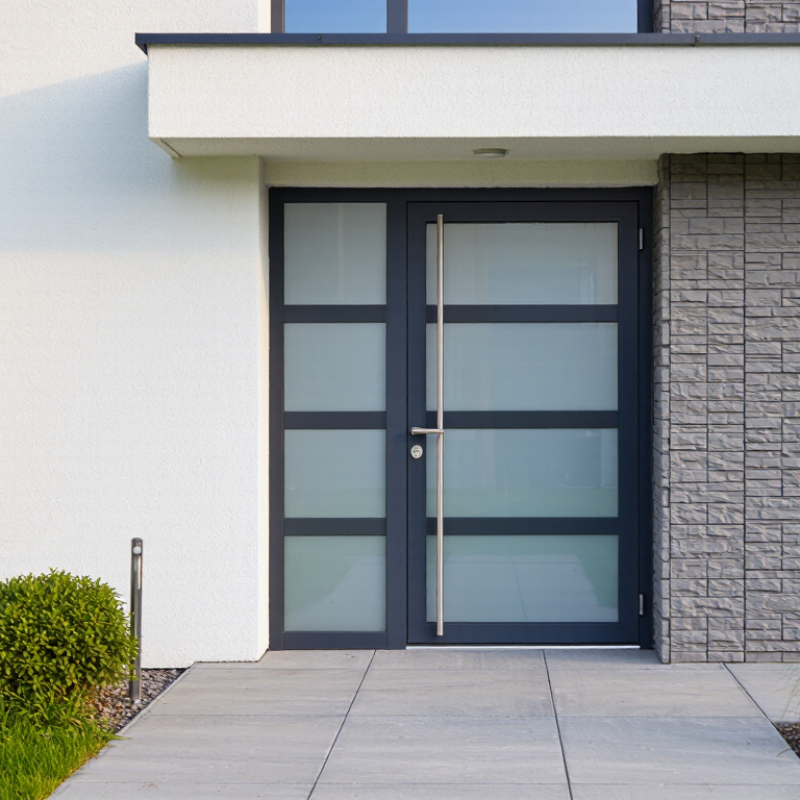
Choosing an aluminum main entrance door begins with your home’s architectural language. A clean, flush door suits modern façades with flat roofs and large windows. Slim frames help preserve the sharp geometry. For traditional homes, consider divided glass, warmer finishes, and balanced proportions. An oversized door can look impressive, but it may overwhelm a narrow entrance.
Tip: Study the façade before choosing the door.
Look at the roofline, window shapes, wall materials, and exterior hardware. A matte charcoal finish can complement brick, stone, or rendered walls. Wood-effect aluminum may soften a contemporary home without sacrificing durability. Industrial properties often suit darker frames, clear glass, and simple handles. Coastal homes may benefit from lighter colors and corrosion-resistant finishes, especially near salt air.
Tip: Match details, not just colors.
The door should also support daily comfort and practical performance. Check its insulation value, weather seals, threshold design, and opening direction. An experienced installer can assess exposure to wind, rain, and strong sunlight. Local building requirements may also affect glazing and accessibility. I have seen attractive doors fail visually because their frame proportions ignored nearby windows. A perfect match is not always necessary. Sometimes, a controlled contrast gives the entrance more character. Still, the contrast should feel intentional, not accidental. When uncertain, compare physical samples beside the façade at morning and evening. Lighting changes everything.
Choose Aluminum Grades and Finishes for Long-Term Durability
An entrance door faces rain, sunlight, fingerprints, and daily impact. Choose the aluminum grade with that workload in mind. Tip one: 6063 aluminum suits most architectural doors because it extrudes cleanly and accepts attractive finishes. Tip two: consider 6061 where higher strength matters, especially for large or heavily used doors. Local fabricators can confirm the alloy and temper. Do not rely on appearance alone.
Tip three: inspect the surface before choosing a finish. Anodizing creates a hard, metallic layer that resists peeling and suits modern entrances. Powder coating offers more color choices and can hide minor visual variations. Tip four: ask how the surface is cleaned, treated, and cured. Poor preparation can cause early fading or adhesion problems. It looks perfect at installation.
Tip five: select a finish suited to the climate. Strong coastal air may require enhanced corrosion protection and careful fastener selection. Tip six: request written coating specifications, including thickness, color tolerance, and maintenance guidance. Tip seven: check the frame’s thermal break, seals, and drainage paths. A durable finish cannot fix water trapped inside the door. I once assumed a thicker coating solved every problem. That assumption was wrong. Door design, installation quality, and regular cleaning matter just as much as the aluminum grade. Scratches should be repaired early, not ignored until corrosion becomes visible.
Choosing an Aluminum Grade for a Durable Main Entrance Door
Higher-strength alloys can provide greater resistance to deformation in large or heavily used entrance doors. The figures below show typical minimum tensile and yield strengths for common extruded aluminum alloys in selected tempers; actual values depend on the applicable standard, profile design, and supplier certification.
For long-term durability, also consider a properly specified anodized or powder-coated finish, correct drainage, compatible fasteners, and regular cleaning. Alloy strength alone does not determine corrosion resistance or service life.
Compare Thermal Insulation and Weatherproofing Features
Choosing an aluminum main entrance door requires more than checking its color and price. Thermal insulation and weatherproofing affect comfort, energy use, and maintenance. Look for a thermally broken frame, where an insulating barrier separates the inner and outer aluminum sections. This reduces heat transfer during hot summers and cold winters. Check the published U-value, too. A lower U-value generally indicates better insulation.
Tip 1: Examine the seals closely. High-quality compression gaskets should sit evenly around the door, without visible gaps or hardened corners. A multi-point locking system can improve compression and reduce drafts. Ask for air leakage and water resistance test results. Real testing is more useful than attractive sales language. I once saw a beautiful door with a weak bottom seal. Rain entered after one storm.
Tip 2: Inspect the threshold and drainage design. A raised threshold may block driving rain, but it can challenge wheelchair access. Sloped drainage channels should guide water away from the entrance. Coastal homes need durable finishes and corrosion-resistant hardware. A Main Door Wholesaler should provide installation guidance, test documents, and warranty conditions. Still, documents cannot fix poor fitting. Leave room for careful measurement, especially around uneven masonry. Small installation errors can create cold spots, rattling, or water leaks. No door is perfect. The practical choice balances insulation, weatherproofing, access, and local climate.
Select Glass, Panels, and Hardware for Everyday Performance
Choosing the best aluminum door for a main entrance starts with the glass. Clear low-emissivity glass can improve daylight and reduce heat transfer. In colder areas, insulated double glazing may make the entryway feel less draughty. For busy homes, laminated or tempered safety glass offers better protection against accidental impact. Privacy glass can help when the door faces a sidewalk. However, heavily tinted glass may make a narrow hall feel gloomy. Check the door’s certified performance and local safety requirements before ordering.
Panels also affect everyday comfort. Solid aluminum panels provide privacy and resist weather exposure. Insulated panels can reduce cold spots near the threshold. Look closely at the thermal break, panel joints, and drainage paths. These small details often matter more than a striking surface finish. Powder-coated finishes are practical, but dark colors can become very hot in direct sunlight. I once chose a beautiful dark panel without studying the afternoon exposure. That was a useful mistake.
Hardware should suit real traffic, not just the showroom appearance. Use corrosion-resistant hinges, a dependable lock, and a handle that feels natural with wet hands. A door closer should control movement without slamming. Test the threshold with shoes, packages, and a child’s reach in mind. Ask how replacement parts will be obtained later. Even excellent hardware can fail when alignment is ignored. Have the installer check the frame, seals, and latch after the first weeks of use.
Check Door Measurements, Installation Methods, and Maintenance Needs
7 Tips for Choosing the Best Aluminum Door for Main Entrance
Measure the opening at three points: top, middle, and bottom. Record width, height, and wall depth. Floors are rarely perfectly level. Leave the correct installation gap for shims and sealant. Check the threshold area for water pooling after rain. A reliable
Main Door Manufacturer should request these measurements before recommending a door size.
Ask whether the door needs a new frame, a replacement frame, or surface mounting. The installation method affects security, insulation, and final appearance. Confirm the swing direction before ordering. A door opening into furniture can become frustrating. Choose durable hinges, a firm lock body, and adjustable rollers where needed. Inspect the wall for cracks before installation. Small defects can grow under a heavy door. I once trusted a rough opening measurement and regretted it. Rechecking takes minutes.
Look for weather seals that meet evenly around the frame. Test the threshold with a sheet of paper; it should resist gentle pulling when closed. Select a finish suited to sunlight, coastal air, or heavy rain. Maintenance should remain practical. Wipe aluminum surfaces with mild soap and clean water. Avoid abrasive pads, which can mark the finish. Check screws, hinges, drainage slots, and seals twice a year. Replace cracked seals early. They are inexpensive compared with correcting interior moisture damage. Ask the installer how to adjust the door after seasonal movement. That detail is often overlooked.
Evaluate Warranties, Energy Ratings, and Overall Purchase Value
Choosing an aluminum main entrance door requires more than comparing frame colors and showroom prices. Warranty language often reveals the real purchase value. Check its duration, coverage for finish, hardware, glass, labor, and installation defects. Transferability also matters if you sell the property.
The U.S. Department of Energy reports that air sealing can reduce annual heating and cooling costs by 10–20%. That number matters. Ask for tested air-leakage results, insulated cores, weatherstripping details, and threshold adjustment options.
The National Fenestration Rating Council’s rating system lists U-factor and solar heat gain coefficient. Lower U-factor generally indicates better insulation. Compare certified ratings, not vague claims such as “energy-saving.”
A reliable Main Door Factory should provide written performance records and installation instructions.
Inspect the sample closely: press the corner joints, check gasket continuity, and examine drainage channels. Coastal homes need different corrosion protection than dry inland properties.
I once treated a long warranty as proof of quality. That was too simple.
Exclusions can quietly remove the finish, labor, or hardware from coverage. Installation matters too. A perfectly rated door can perform poorly when the sill is uneven or the frame lacks proper sealing. Include future maintenance, replacement parts, and estimated energy savings in the final calculation.
Australia AS2047 & NFRC-Certified Outdoor Balcony Soundproof Double-Glazed Aluminum Sliding Doors
Designed for outdoor balconies, patios, and commercial façades, this high-performance aluminum sliding door combines certified structural reliability with advanced sound and thermal insulation. It complies with Australian AS2047 requirements and meets the NFRC energy-efficiency benchmark, making it suitable for demanding residential and commercial projects. The precision-engineered frame is manufactured from durable 6063-T5 aluminum alloy, while double-tempered Low-E insulated glass helps reduce heat transfer, external noise, and indoor energy loss. With sound insulation of up to 40 dB or more, the system creates a quieter and more comfortable interior environment.
The sliding door is engineered to provide excellent resistance to wind and water, supporting dependable performance in exposed balcony and façade applications. It is produced in a factory certified to ISO9001, ISO14001, and ISO45001 standards, with every unit fully inspected before dispatch. Custom options include frame color, dimensions, opening configuration, and glass specification, allowing the system to adapt to varied architectural requirements. With no minimum order quantity, it offers a practical solution for projects across Australia, North America, and Southeast Asia.
FAQS
Clear low-emissivity glass improves daylight and limits heat transfer. Insulated double glazing can reduce draughts in colder areas.
Laminated or tempered glass helps resist accidental impact. Privacy glass suits doors facing sidewalks, but heavy tint can darken narrow halls.
Check the thermal break, panel joints, and drainage paths. Insulated panels can reduce cold spots near the threshold.
Powder-coated finishes are durable and practical. Dark panels can become very hot in strong afternoon sunlight.
Choose corrosion-resistant hinges, a dependable lock, and a handle that feels secure with wet hands. A closer should prevent slamming.
Try the threshold with shoes and packages. Consider a child’s reach, latch alignment, gasket continuity, and frame movement.
Request certified air-leakage results, U-factor, solar heat gain data, and installation instructions. Avoid vague claims like “energy-saving.”
Check coverage periods for glass, finish, hardware, labor, and installation defects. Exclusions may quietly remove important protection.
Yes. An excellent door can perform poorly with an uneven sill or weak frame sealing. Early adjustment may prevent larger problems.
Include maintenance, replacement parts, installation, corrosion protection, and estimated energy savings. A long warranty alone proves little.
Conclusion
Choosing the Best Aluminum Door For Main Entrance requires balancing security, appearance, durability, and long-term value. Start by identifying your access and safety needs, such as reinforced frames, reliable locks, and suitable opening systems. The door should also complement your home’s architectural style, whether modern, traditional, or minimalist. Pay attention to aluminum grade, protective finishes, and resistance to corrosion, moisture, sunlight, and daily wear. Thermal breaks, weather seals, and quality insulation can improve indoor comfort and energy efficiency throughout the year.
Glass or solid panels should match your privacy, lighting, and safety preferences, while hinges, handles, locks, and closers must be designed for frequent use. Accurate measurements are essential, and the installation method should suit the structure of the entrance. Consider cleaning requirements and routine maintenance before purchasing. Finally, compare warranties, energy ratings, installation support, and total ownership costs to ensure the selected door delivers dependable performance, attractive design, and lasting value for your home.