Leave Your Message
Submit Message
Call: +8615878811461
Email: windowsdoors@dejiyp.com
WhatsApp Live Chat
Need Live Support?
Chat With Us Now
0%

Picking a secure entrance isn’t just about having nice-looking aluminum profiles. It’s really about making sure the hardware is tested, the fabrication is precise, and the installation instructions are reliable. If you’re working with Guangdong EverSecure Door Systems Co., Ltd., you’re dealing with a company that’s here to support architects, distributors, and project contractors who need a solid, China-based solution. We’ve got experience across all kinds of projects—whether it’s residential buildings, hotels, offices, or seaside properties. Our Multi Point Locking Aluminum Doors are designed to meet real security needs, operate smoothly, and stand the test of time.

During production, we check everything—profile dimensions, lock alignment, gasket compression, surface finish—you name it. Our factory team uses calibrated tools to make sure corners and locking points are spot-on. Before any door leaves, we open, close, and tweak sample doors multiple times to catch issues like friction, uneven gaps, or handle movement. Tiny details really do matter. A lock might be super strong, but if it’s installed with tolerances off, it’ll underperform. We also provide detailed drawings, hardware specs, and installation tips tailored to different project needs.

As a trusted supplier of multi point locking doors, Guangdong EverSecure focuses on clear communication and quality you can trace. We can customize colors, glass options, opening styles, and hardware setups. Our technical team also reviews factors like wind exposure, door size, how often it’ll be used, and any local requirements before we start manufacturing. We know no product is perfect right off the bat. We keep listening to feedback from installers and end users—especially when adjustments take longer than expected—because honest reviews help us improve our future designs. If you’re comparing different aluminum door makers, our main goal is simple: provide reliable doors, practical support, and specs that you can verify before buying.
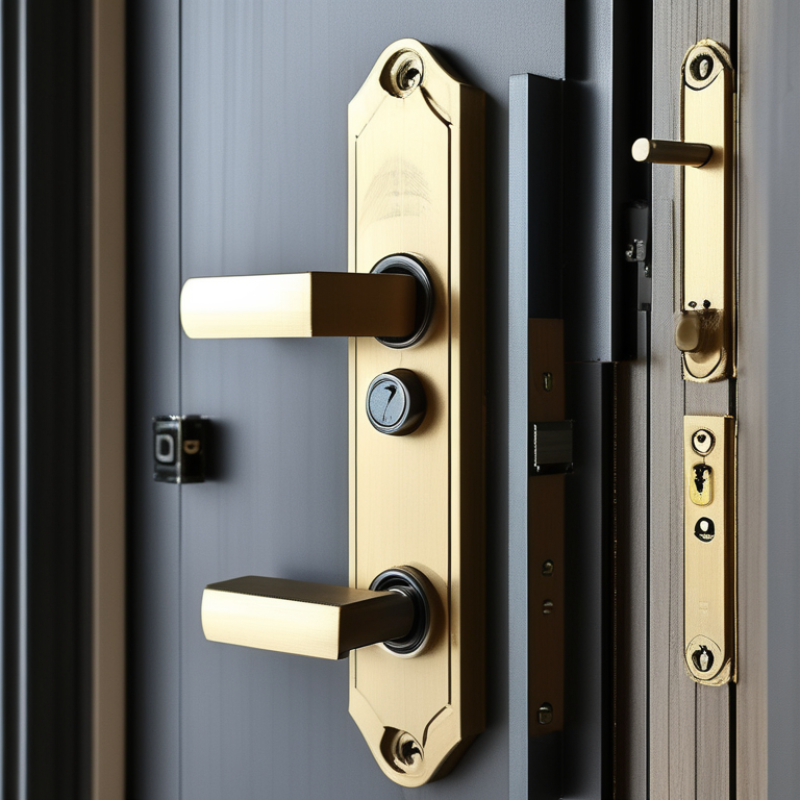
China Best Multi Point Locking Aluminum Door Manufacturer

Definition of Multi Point Locking Aluminum Doors

China Best Multi Point Locking Aluminum Door Manufacturer

A Multi Point Locking Aluminum Door secures the sash at several locations, not one central latch. Turning the handle moves steel bolts, hooks, or rollers into keeps along the jamb and head. This distributes pressure around the frame. It also helps reduce sash movement during wind or repeated daily use.

A proper definition includes more than hardware. The door should combine a rigid aluminum profile, accurate corner joints, weather seals, and a correctly aligned lock case. Thermal-break aluminum is especially important for reducing heat transfer. The U.S. Department of Energy reports that windows can cause 25–30% of residential heating and cooling energy use. Doors share similar envelope risks when seals or installation details fail. It is practical.

The International Energy Agency’s 2023 Buildings report states that building operations represent about 30% of global final energy consumption and 26% of energy-related emissions. This gives door performance wider relevance, although a lock alone cannot deliver energy efficiency. A responsible Multi Point Locking Door Wholesaler should provide test evidence for air leakage, water penetration, security performance, and cycle durability. On site, small gaps around the strike plate can undermine expensive hardware. That detail matters.

Definitions can still be imperfect. More locking points do not automatically mean better protection. Poor alignment, weak fixings, or an unsuitable cylinder may reduce real performance. Experienced installers check the frame, threshold, drainage, and handle operation together before approval.

Definition of Multi Point Locking Aluminum Doors

A multi point locking aluminum door secures the door leaf at more than one location along the frame. The chart shows common locking configurations: three-point systems typically secure the top, center, and bottom areas, while five- and seven-point systems add further engagement points for improved load distribution and resistance to forced entry. The number of locking points depends on the selected hardware design and door specification.

Key Features of China-Made Multi Point Locking Doors

Key Features of China-Made Multi Point Locking Doors

A Multi Point Locking Door secures the sash at several positions, not only beside the handle. Hooks, rollers, and deadbolts press the door evenly against the frame. This reduces gaps and improves resistance to forced movement. In practical factory inspections, alignment matters as much as hardware strength. A perfect lock can still fail when hinges sag.

The U.S. Department of Energy reports that windows account for about 25–30% of residential heating and cooling energy use. A well-adjusted aluminum door can support tighter envelope performance, especially around the gasket line. The 2023 Global Status Report for Buildings and Construction states that buildings consumed about 34% of global energy in 2022. Small sealing details deserve attention. Thermal breaks, low-conductivity spacers, and continuous weather seals improve comfort near entrances.

A reliable Multi Point Locking Door Manufacturer should verify cycle life, corrosion resistance, load performance, and locking-point engagement. Hardware must match the aluminum profile precisely. Poor tolerances create stiff handles and incomplete locking. Some suppliers emphasize the number of bolts, but that figure alone proves little. Testing should follow recognized methods, such as EN 1627 security classifications and relevant door hardware standards. Installers should also check emergency egress requirements and provide adjustable keeps. Chinese production can offer precise CNC machining and flexible customization, though quality control must remain traceable from extrusion to final inspection. Mistakes still happen. Honest inspection records are more valuable than polished claims.

How Multi Point Locking Systems Work

A multi point locking system secures an aluminum door at several positions, not only beside the handle. Turning the key moves steel or stainless-steel bolts into the head, sill, and side jamb. The door compresses its seals more evenly. This reduces movement, drafts, and visible pressure at one latch point.

The mechanism starts with a cylinder or thumb turn. Its rotation drives a central gearbox. Connecting rods then operate hooks, rollers, or deadbolts along the door edge. Precise alignment matters. A 1-millimeter height error can create resistance and uneven seal compression. Installers should check hinges, strike plates, drainage, and cylinder protection before final adjustment. A Multi Point Locking Door Factory should verify repeated-cycle performance, corrosion resistance, and emergency egress requirements.

Security needs evidence, not impressive hardware. The FBI Crime Data Explorer reported 847,522 burglary offenses in the United States during 2022. A stronger locking layout can reduce common pry points, but it cannot replace sound frames or proper installation. EN 1627 testing evaluates complete door assemblies, including the leaf, frame, hardware, and glazing. Testing only the lock gives an incomplete picture. In practice, technicians should record torque, bolt engagement, and operation after temperature changes. Small defects remain possible. A stiff handle may signal alignment trouble, not stronger security.

China Best Multi Point Locking Aluminum Door Manufacturer - How Multi Point Locking Systems Work
Data Dimension Typical System Data How the System Works Practical Benefit for Aluminum Doors
Locking Point Layout 3-point 5-point 7-point configurations are commonly available The central lock case operates additional locking elements positioned above and below the main latch or deadbolt. Locking force is distributed along the door height instead of being concentrated at one point near the handle.
Main Lock Case Usually includes a latch bolt, deadbolt, follower, spindle hub and cylinder housing. Turning the key or operating the handle controls the central locking mechanism and activates the connected rods or strips. Provides the primary access-control function while coordinating all secondary locking points.
Secondary Locking Elements Common types include hook bolts, shoot bolts, roller cams and mushroom cams. Secondary elements extend into keeps fitted to the frame when the door is fully locked. Hooks and bolts improve resistance to pulling and levering; rollers support compression and smoother sealing.
Operating Sequence Handle-operated or key-operated systems; some designs use a lift-before-lock action. The door is first closed against the frame. Depending on the design, lifting the handle or turning the key drives the additional locking points into position. Correct engagement helps maintain alignment and reduces movement between the sash and frame.
Locking Rods or Strips Vertical rods, connecting bars or concealed gearbox strips transfer movement from the central lock case. Movement from the handle or cylinder travels through the transmission system to the upper and lower locking points. Concealed transmission components preserve a clean aluminum door appearance and protect key parts from direct exposure.
Common Materials Zinc alloy, stainless steel, carbon steel and reinforced engineering polymers are used according to the component. Structural locking components carry the mechanical load, while polymer guides and rollers reduce friction and operating noise. Material selection affects corrosion resistance, service life, operating smoothness and maintenance requirements.
Frame Keeps Keeps or strike plates are installed opposite each locking point on the aluminum frame. When the door closes, the latch, hooks, bolts or cams enter the corresponding keeps and hold the sash in the locked position. Accurate keep positioning is essential for reliable locking and for avoiding excessive handle force.
Compression Control Roller cams and adjustable keeps can control the contact pressure between the sash seals and frame. Adjusting the locking points changes how firmly the door gasket is compressed when the door is locked. Proper compression can help reduce air leakage, water penetration and rattling, subject to the complete door design.
Security Function Multiple engagement points, a protected cylinder and reinforced keeps are typical security features. Several points must be released before the door can be forced open, making the locking load more difficult to defeat at a single location. Provides broader resistance than a single latch, although total performance also depends on the frame, hinges, cylinder, hardware and installation.
Weather Performance The lock system works together with perimeter gaskets, threshold seals and correctly adjusted keeps. Multiple locking points pull the sash more evenly against the seals along the door height. Can support improved sealing performance when the door profile, gasket design and installation are correctly matched.
Door Compatibility Compatibility depends on backset, faceplate width, lock-center distance, spindle size, door thickness and profile geometry. The lock body and transmission must fit inside the aluminum profile without interfering with glazing, drainage or reinforcement. Accurate hardware selection prevents fitting problems and supports smooth, secure operation.
Typical Door Applications Residential entrance doors, apartment doors, balcony doors, commercial entrances and thermally broken aluminum systems. The same basic principle can be adapted to inward-opening or outward-opening doors, subject to hardware design and local requirements. A multipoint system is suitable where improved security, sealing and stability are required from a single door assembly.
Maintenance Requirements Periodic cleaning, alignment checks and manufacturer-approved lubrication are generally recommended. Maintenance keeps the rods, rollers, hooks, cylinder and keeps moving freely and reduces stress on the handle and gearbox. Regular adjustment and inspection can help extend service life and identify loose fixings, worn parts or frame movement.
Testing Considerations Relevant evaluations may include cycle testing, corrosion testing, operating force, security performance, air permeability, watertightness and wind resistance. The lock is assessed as part of a complete door assembly rather than as an isolated component for many performance tests. A complete system test gives a more realistic indication of the installed door's durability, security and weather performance.
Key Selection Criteria Number and type of locking points, profile compatibility, cylinder format, corrosion protection, operating method and certification requirements. These factors determine whether the multipoint mechanism will fit, operate correctly and meet the intended application requirements. Matching the lock to the aluminum profile and project specifications is more important than selecting a higher point count alone.
Technical note: Actual locking-point numbers, dimensions, load ratings and test results vary by door profile, hardware configuration and applicable regional standards. The complete door assembly should be checked for compatibility and tested according to the project requirements.

Aluminum Profiles, Hardware, and Security Components

China Best Multi Point Locking Aluminum Door Manufacturer

Reliable aluminum doors begin with more than attractive extrusion lines. They require stable profiles, tested hardware, and carefully matched security components.

The 2024 Global Status Report for Buildings and Construction states that buildings consume about 32% of global energy and produce approximately 34% of global carbon emissions.

This strengthens the case for thermally separated aluminum profiles, accurate weather seals, and controlled installation gaps.

In practical production, profile quality affects every locking point. We inspect wall thickness, corner joints, drainage paths, and thermal-break alignment before assembly. Multi-point locks should engage smoothly without forcing the sash. Hinges must carry the door weight while maintaining consistent compression. Cylinders, strike plates, handles, and fasteners also need coordinated tolerances. Small errors become obvious near the handle.

The U.S. Department of Energy reports that windows can represent 25–30% of residential heating and cooling energy use.

Doors deserve similar attention, especially at entrances exposed to wind and frequent operation.

Hardware should be evaluated against applicable standards, including EN 1627 for burglary resistance and EN 12209 for mechanically operated locks. These standards guide testing, but they do not replace field experience.

No locking system is perfect. A rushed inspection, weak fixing substrate, or poorly adjusted seal can reduce real security. Better manufacturing leaves room for that uncomfortable lesson.

Manufacturing Standards and Quality Control

China Best Multi Point Locking Aluminum Door Manufacturer

Manufacturing Standards and Quality Control

A multi-point locking aluminum door must be tested as a complete system. Hardware alone cannot guarantee security or weather resistance. Our production checks begin with aluminum profile thickness, alloy condition, and thermal-break alignment. Each batch receives dimensional inspection before assembly.

European standards provide useful benchmarks. EN 12207 evaluates air permeability, while EN 12208 measures watertightness. EN 12210 addresses resistance to wind load. Security testing under EN 1627 can classify resistance levels. These tests expose weak corners, poor seals, and inaccurate locking points. They also create traceable evidence for buyers and project engineers.

Energy performance matters too. The International Energy Agency reports that buildings consume about 30% of global final energy. The U.S. Department of Energy states that windows can cause 25–30% of residential heating and cooling energy use. A poorly adjusted door may increase leakage around the frame. Small gaps matter.

Our inspectors check corner joints, gasket compression, lock engagement, and drainage paths. They use calibrated gauges, not visual judgment alone. Random cycle testing also simulates repeated opening and closing. Still, our process is not flawless. Aluminum expands, hardware tolerances vary, and installation can change test results. We therefore record failures, review root causes, and adjust tooling when necessary. A clean sample is not enough. Reliable manufacturing requires repeatable evidence.

How to Select a Reliable Chinese Door Manufacturer

Choosing a reliable Chinese door manufacturer requires more than comparing online prices. Start by checking factory experience with aluminum profiles, thermal breaks, and multi-point hardware. Ask for project photos, production records, and test reports from recent orders. A serious supplier should explain alloy grades, glass options, drainage design, and locking points clearly. Vague answers are warning signs. Request a video call from the workshop, not only a polished showroom. Look for organized cutting areas, labeled components, and workers inspecting frame corners.

A capable Multi Point Locking Door Company should provide detailed drawings before production. These drawings must show opening direction, frame dimensions, hardware positions, and installation gaps. Confirm who checks measurements. One overlooked millimeter can cause difficult installation. Ask for sample approval, packaging details, lead time, spare parts, and after-sales response. For coastal projects, discuss corrosion protection and drainage testing. For cold regions, request evidence of air leakage and thermal performance testing. Ask for evidence. Certificates matter, but their scope and validity also deserve careful review.

Communication is another practical test. Send a technical question and observe whether the reply is precise, timely, and consistent. A reliable manufacturer will admit limits instead of promising every specification. That honesty may feel less impressive, yet it reduces costly surprises. I would also order one sample door when the project budget allows. The sample reveals surface quality, handle alignment, seal compression, and packaging discipline. Still, a sample is not proof of long-term performance. Visit or independently inspect the factory when possible. Keep written records of changes, approvals, and responsibilities. Some evaluations are imperfect; revisiting assumptions is part of due diligence.

FAQS

: What is a multi-point locking door?

: It locks the door sash at several positions, not only near the handle. Hooks, rollers, or deadbolts press against the frame. This reduces movement and visible gaps.

Why does alignment matter?

Poor alignment can weaken even strong hardware. Sagging hinges may prevent complete engagement. Small errors become obvious near the handle.

Can these doors improve indoor comfort?

Yes, when properly adjusted. Thermal breaks, continuous weather seals, and low-conductivity spacers reduce drafts near entrances.

Which components require careful matching?

Aluminum profiles, hinges, cylinders, strike plates, handles, and fasteners must work together. Their tolerances should support smooth operation.

Does a higher bolt count guarantee better security?

No. More locking points do not prove better performance. Testing, fixing strength, alignment, and complete engagement matter more.

What should quality inspections include?

Inspections should check cycle life, corrosion resistance, load performance, and locking-point engagement. They should also review wall thickness, drainage paths, and corner joints.

Which standards may guide testing?

EN 1627 can guide security classification. EN 12209 can guide mechanically operated lock testing. Local requirements may also apply.

What installation problems can reduce performance?

Weak fixing surfaces, incorrect gaps, rushed adjustments, and compressed seals can reduce reliability. Installation matters greatly.

Can customized production offer useful advantages?

It can support precise machining and flexible dimensions. However, quality records must remain traceable from profile extrusion to final inspection.

Is any locking system completely fail-safe?

No system is perfect. Honest inspection helps reveal uncomfortable weaknesses before daily use. Mistakes still happen.

Conclusion

A Multi Point Locking Aluminum Door is designed to secure the door frame at several points along the locking edge, providing stronger protection, improved stability, and better resistance to forced entry than a single-point lock. China-made multi point locking doors typically combine durable aluminum profiles with precision-engineered locks, reinforced hinges, security cylinders, weather seals, and adjustable handles. When the handle or key is operated, multiple bolts engage with the frame simultaneously, helping create a tighter seal and improving insulation, wind resistance, and everyday performance.

Reliable manufacturing depends on accurate profile processing, consistent hardware installation, corrosion-resistant finishes, and strict quality control at every production stage. Buyers should evaluate a Chinese door manufacturer by reviewing material specifications, production capabilities, testing procedures, customization options, packaging methods, and after-sales communication. A dependable supplier should provide clear technical details, stable product quality, professional support, and inspection records to ensure the finished doors meet project requirements and perform reliably over time.
Liam

Liam

Liam is a dedicated marketing professional with a profound expertise in high-end doors and windows manufacturing. With a strong focus on innovation and quality, he plays a pivotal role in promoting the products of his company, which is recognized as a leader in the global market. Liam frequently......
Previous Top 5 Benefits of Watertight Aluminum Pivot Doors?