Leave Your Message
Submit Message
Call: +8615878811461
Email: windowsdoors@dejiyp.com
WhatsApp Live Chat
Need Live Support?
Chat With Us Now
0%

Looking ahead to 2026, choosing a waterproof aluminum door isn’t just about its sleek finish. Think about it — rain can puddle up along a low sill, and strong winds might push water into a corner that’s not sealed properly. A really well-designed door handles these everyday challenges by using the right weatherstripping, smart drainage solutions, and careful installation. It’s all about how the whole system works together, not just the door itself.

Elena Ward, a building-envelope expert, puts it simply: “Water resistance depends on the entire opening, not just the door panel.” Basically, that’s a good rule of thumb — it’s a practical way to test if the door will actually hold up. Even a high-quality product can struggle if the frame’s out of square or if the threshold isn’t installed right.

This guide covers some of the most popular options out there — sliding, hinged, folding, and thermally broken aluminum doors. We’ll point out where each kind works best, what details you should really pay attention to, and the questions you should ask before making a purchase. A trustworthy Waterproof Aluminum Door Supplier should be able to walk you through the drainage routes, seal designs, hardware, and maintenance in straightforward terms. Also, don’t forget to ask for specs — marketing hype alone won’t cut it.

Keep in mind, some options involve trade-offs. Sliding doors are great if you need more space to swing open, but those tracks do need a regular cleaning. Hinged doors can seal really tightly, but they require enough room to open properly. So, the best choice really depends on your exposure to weather, the layout of your space, and how well everything is installed — not just how it looks. Little details matter — like a visible weep hole, a continuous gasket, or a door that closes smoothly — these little things say a lot about how well it will perform over time.
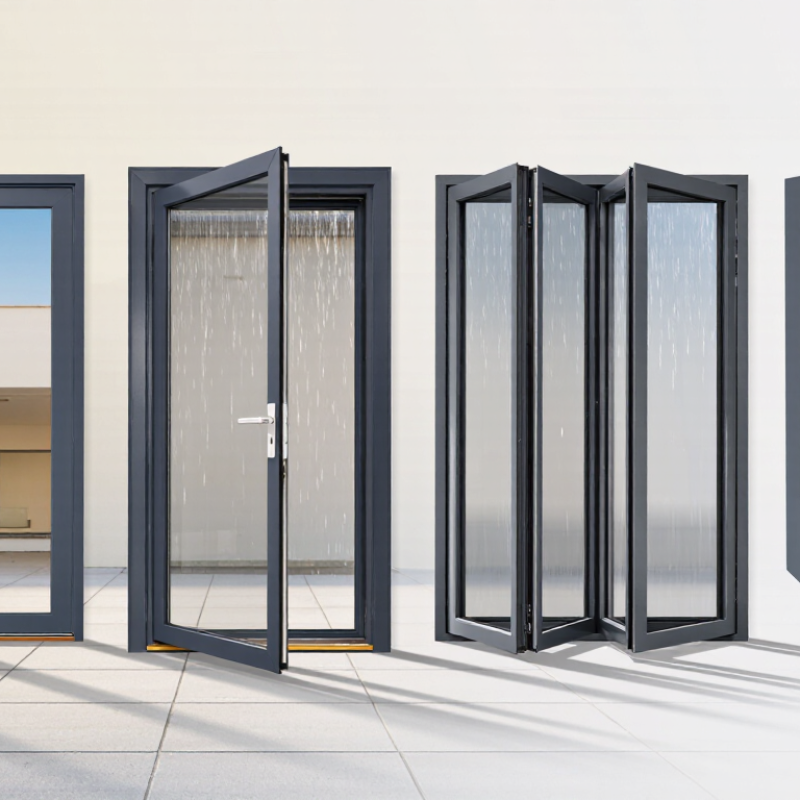
What Are the Top Waterproof Aluminum Door Types in 2026?

Waterproof Aluminum Door Criteria: EN 12208 Class 9A Requires 600 Pa Resistance

For a credible waterproof aluminum door, ask for a tested classification, not a vague “waterproof” claim. Under EN 12208, Class 9A corresponds to resistance at 600 Pa during the standardized water-penetration test. EN 1027 specifies the test method: water is sprayed across the specimen while pressure rises in controlled steps. That is a laboratory result, not a promise against every storm or installation defect. Details matter.

For buyers comparing top door types in 2026, this benchmark helps assess hinged, sliding, and folding systems, but the complete assembly must be tested. A strong frame means little if water slips past a worn gasket, weak corner joint, or poorly drained track. Check the test report for specimen size, opening style, and observed leakage, then match those details to the project. A Waterproof Aluminum Door Wholesaler should provide traceable test documentation and explain installation requirements. Ask about sill drainage, seal replacement, and exposure conditions. Small gaps count. One caveat: site workmanship can undermine a high laboratory rating, and that is easy to overlook.

Water Tightness Ratings for Aluminum Doors: EN 12208 Classes

EN 12208 classifies doors by the pressure reached during a water penetration test. Class 9A corresponds to a test pressure of 600 Pa.

Higher test pressure indicates a higher water tightness classification under the standard test conditions. A classification is not, by itself, a guarantee of performance in every installation or exposure.

Hinged Aluminum Doors: Multi-Point Seals and ASTM E331’s 15-Minute Spray Test

Hinged aluminum doors can resist rain when their frame, threshold, and seals work as one system. Multi-point locking pulls the sash evenly against compression seals, reducing gaps along the jamb and head. A single latch may leave a corner slightly loose. Small details matter: a clean gasket, a level sill, and drainage paths that remain open after installation.

ASTM E331 evaluates water penetration under a controlled spray and pressure difference. Project specifications may call for a 15-minute spray period, but the test pressure and setup also affect results. It is not a promise that every door will stay dry in every storm. Wind-driven rain, poor installation, or blocked weep openings can still cause leakage. That caveat is easy to overlook. Ask a Waterproof Aluminum Door Manufacturer for the tested assembly details, including door size, hardware, seal configuration, and pressure rating. Field checks matter too; even a well-tested door can disappoint if the threshold sits unevenly. A careful hose test may reveal issues, but it does not replace laboratory testing.

Lift-and-Slide Aluminum Doors: Drainage Rails and Water-Tightness up to 600 Pa

Lift-and-slide aluminum doors combine wide glass openings with practical water control. Their drainage rails collect rainwater from the track and guide it toward exterior outlets. Unlike hinged doors, these systems need careful threshold design because sliding panels move across the drainage zone. The rail should include stable slopes, clean channels, and protected weep holes. Small errors matter. Poor leveling can leave water inside the frame.

A well-engineered system may achieve water-tightness up to 600 Pa under controlled testing. This pressure indicates strong resistance to wind-driven rain, but it is not a promise for every installation. Testing should include the complete door assembly, seals, panels, hardware, and threshold. An experienced Waterproof Aluminum Door Factory should provide test documentation and clear installation limits. On site, installers must keep drainage paths free from mortar, dust, and packaging debris. Even a high-performing door can leak when the outer sill is blocked. Regular inspection also helps, especially after heavy storms.

The best performance comes from layered protection. Compression seals reduce air movement, while drainage rails manage water that passes the outer seal. The aluminum frame needs accurate joints and durable corner connections. I would still question any product described as “fully waterproof” without pressure-test details, because building exposure varies greatly. Coastal wind, uneven slabs, and poor flashing can change the result. Some practical weaknesses only appear after months of weather, not during a showroom demonstration.

Folding Aluminum Doors: Panel Gaskets, Sills, and AAMA 501.1 Hose Testing

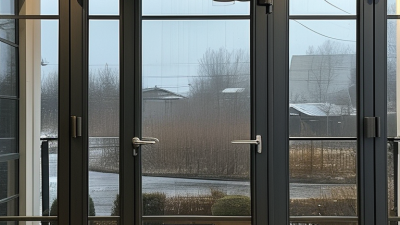
Folding aluminum doors can offer wide openings, but waterproofing depends on small details. Panel gaskets must compress evenly along every meeting stile and corner. A loose gasket can create a visible leak during wind-driven rain. Continuous seals are useful, yet poorly aligned panels can still leave gaps. Installation quality matters as much as the door design.

The sill deserves close attention. A sloped, drained sill should guide water toward exterior weep paths. Blocked drainage channels can turn minor rain into interior staining. During an AAMA 501.1 hose test, technicians apply controlled water to the exterior while checking the interior for leakage. The test should include panel joints, corners, sill ends, and threshold transitions. One successful test does not prove permanent performance. Movement, dirt, and aging seals may change the result.

Tips

Inspect gaskets before testing. Keep sill channels clear. Confirm that weep paths are open. Test after final adjustments, not before. Record the hose location and observed leakage. Small notes can prevent repeated repairs.

A practical inspection should also check floor levels and frame anchorage. Excessive movement may reduce gasket contact when panels operate. I would not rely on sealant alone, because sealant can hide drainage problems temporarily. A better approach combines accurate installation, replaceable gaskets, proper sill drainage, and documented field testing. Some details remain imperfect, especially at corners. That is where careful review matters most.

Thermally Broken Aluminum Doors: Lower U-Factors and Reduced Condensation Risk

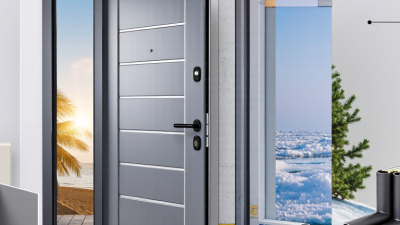
Thermally broken aluminum doors help control heat flow through the frame. A nonconductive material separates the interior and exterior aluminum sections, reducing thermal bridging. In winter, this can mean a warmer inside frame and less risk of condensation around the edges of the glass. Less moisture matters in entryways where wet boots and cold drafts already meet.

Look closely at the threshold, corner joints, and weather seals. A thermally broken frame is not automatically waterproof; poor installation or clogged drainage channels can still let water in. After heavy rain, check for damp spots along the sill. Small clues count.

A reliable Waterproof Aluminum Door Company should explain how the frame, glazing, seals, and threshold work together, rather than relying on the thermal break alone. Ask for tested U-factor data for the complete door assembly, since glass choice and frame size affect performance. And measurements matter. Even a well-made door can underperform if the opening is out of square. I’d also ask how seals are inspected and replaced over time; maintenance is easy to overlook.

2026 Comparison: Water Resistance, Air Leakage, Thresholds, and Maintenance Data

What Are the Top Waterproof Aluminum Door Types in 2026?

For wet, exposed openings, compare aluminum casement, hinged, sliding, and lift-slide doors by tested performance—not by “waterproof” claims. ASTM E547 evaluates water penetration under cyclic pressure, while ASTM E283 measures air leakage; neither standard creates a universal ranking by door type. The North American Fenestration Standard (NAFS), published by AAMA, WDMA, and CSA, classifies products by performance grade and design pressure. Ask for the test report for the exact size and configuration: a wide slider with several meeting rails may behave differently from a single hinged panel. Details matter.

Tip: Check the threshold section and sill drainage. A low, flush threshold is convenient, but it leaves less room to manage wind-driven rain. Look for documented drainage paths, properly sealed frame corners, and test results that identify the water-test pressure. Air leakage figures also need units and test pressure; numbers without these details are hard to compare.

In practice, casement and hinged doors can compress weatherstripping against their frames, while sliding systems depend on seals at tracks and interlocks. That is not a guarantee. Installation can undo a good lab result: a slightly bowed frame or blocked weep opening may let water collect beside the threshold. The U.S. Department of Energy estimates that windows account for about 25–30% of residential heating and cooling energy use, underscoring why air leakage deserves attention alongside water resistance. Inspect seals and clear drainage openings seasonally. Real weather is messier than a test chamber.

A Safer Welcome: Choosing an Exterior Security Entry Door for Your Home

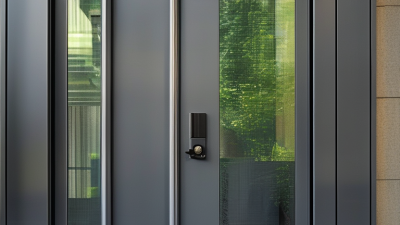
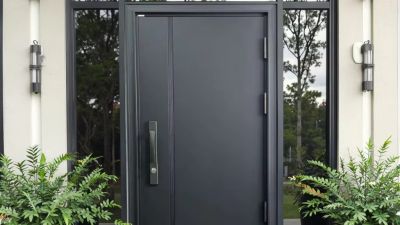
Choosing the right exterior security entry door begins with understanding its role as the first protective boundary of your home. Unlike an interior entrance door, a courtyard gate must withstand changing weather, daily exposure, and frequent use while complementing the surrounding landscape. An aluminum and stainless steel construction offers a practical balance of durability, corrosion resistance, and modern style, making it suitable for villa courtyards, garden entrances, and outdoor passageways.

Safety is strengthened through a 1.5-hour fire rating and certified anti-theft performance, helping create a more secure welcome for residents and visitors. Its clean, minimalist appearance blends naturally with contemporary architecture, while reliable manual operation provides straightforward access without unnecessary complexity. For larger residential developments, commercial parks, and garden communities, a complete project service can support the process from design and production to delivery, with coordinated solutions for different outdoor layouts. A five-year warranty further reflects confidence in the door’s long-term quality and dependable performance.

FAQS

What does Class 9A mean for a waterproof aluminum door?

Class 9A indicates resistance to water penetration at 600 Pa. It comes from a controlled laboratory test. It does not guarantee protection during every storm. Installation still matters.

Which test method measures water penetration?

EN 1027 describes a water-penetration test. Water sprays across the door while pressure rises in controlled steps. Ask for the complete test report. Check the tested size and opening style.

Are hinged doors better than sliding doors in heavy rain?

Not automatically. Hinged doors can compress weather seals against the frame. Sliding doors rely on track seals and interlocks. A wide slider may perform differently from one hinged panel. The test result matters more than the door label.

What should buyers inspect around the threshold?

Look for clear drainage paths and sealed frame corners. A low threshold is convenient but offers less drainage space. Check for blocked weep openings after rain. Small gaps count.

Does a thermal break make an aluminum door waterproof?

No. A thermal break reduces heat transfer through the frame. It may also reduce condensation near the glass edges. Clogged channels and poor installation can still cause leaks. That distinction is easy to miss.

How can air leakage affect door performance?

Air leakage can increase drafts and energy loss. Ask for the test pressure and measurement units. Numbers without context are difficult to compare. A door may resist rain yet still feel drafty.

What maintenance does a waterproof aluminum door need?

Inspect weather seals and drainage openings seasonally. Remove dirt from tracks and weep holes. Replace worn gaskets when they lose flexibility. After heavy rain, check the sill for damp spots. Maintenance gets forgotten.

Which details should be confirmed before ordering?

Confirm the exact size, configuration, glass, threshold, and frame design. Ask how corners, seals, and drainage work together. Verify the opening is square before installation. A strong door can underperform in a distorted opening. I would not rely on the word “waterproof” alone.

Conclusion

Choosing the right Waterproof Aluminum Door in 2026 depends on more than appearance. EN 12208 Class 9A is a key benchmark, requiring resistance to water penetration at pressures up to 600 Pa. Hinged aluminum doors can achieve strong performance through multi-point seals and are commonly evaluated with ASTM E331’s 15-minute spray test. Lift-and-slide systems rely on carefully designed drainage rails to direct water away while maintaining tightness under pressure. Folding doors need continuous panel gaskets, well-built sills, and reliable hose-test performance under AAMA 501.1 procedures.

Thermally broken aluminum doors provide an additional advantage by reducing heat transfer, lowering U-factors, and limiting condensation around the frame. A practical 2026 comparison should consider water resistance, air leakage, threshold design, drainage capacity, and long-term maintenance. Hinged systems may offer dependable sealing, sliding doors prioritize large openings and drainage, while folding designs balance flexibility with more gasket maintenance. The best choice depends on climate, exposure, opening size, and the required level of performance.
Ethan

Ethan

Ethan is a dedicated marketing professional with a profound expertise in the high-end doors and windows industry. He plays a pivotal role in promoting innovative products that exemplify quality and craftsmanship. With a keen understanding of market trends, Ethan is committed to providing insightful......
Previous China Top 10 Thermal Break Aluminum Door Manufacturers?